

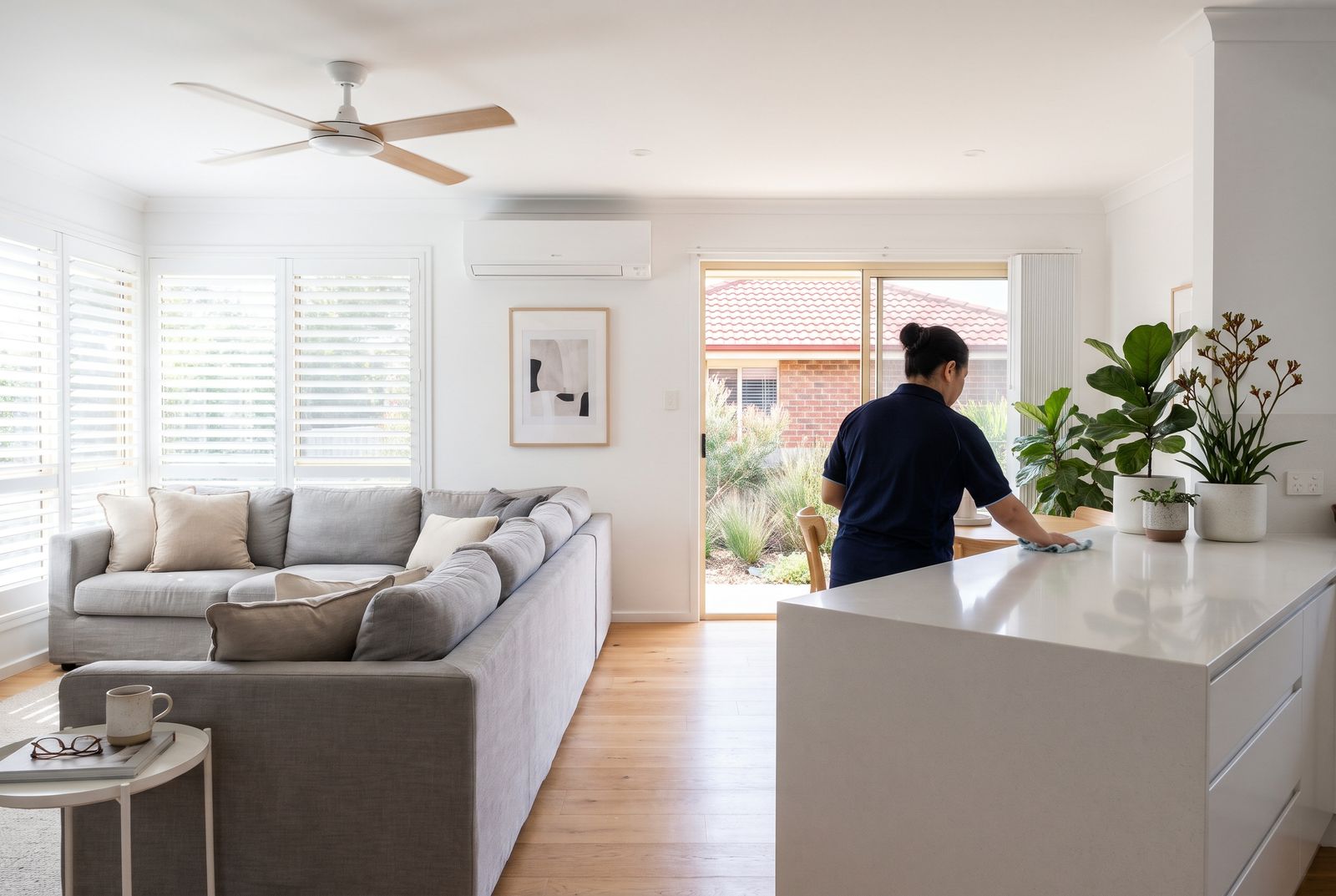
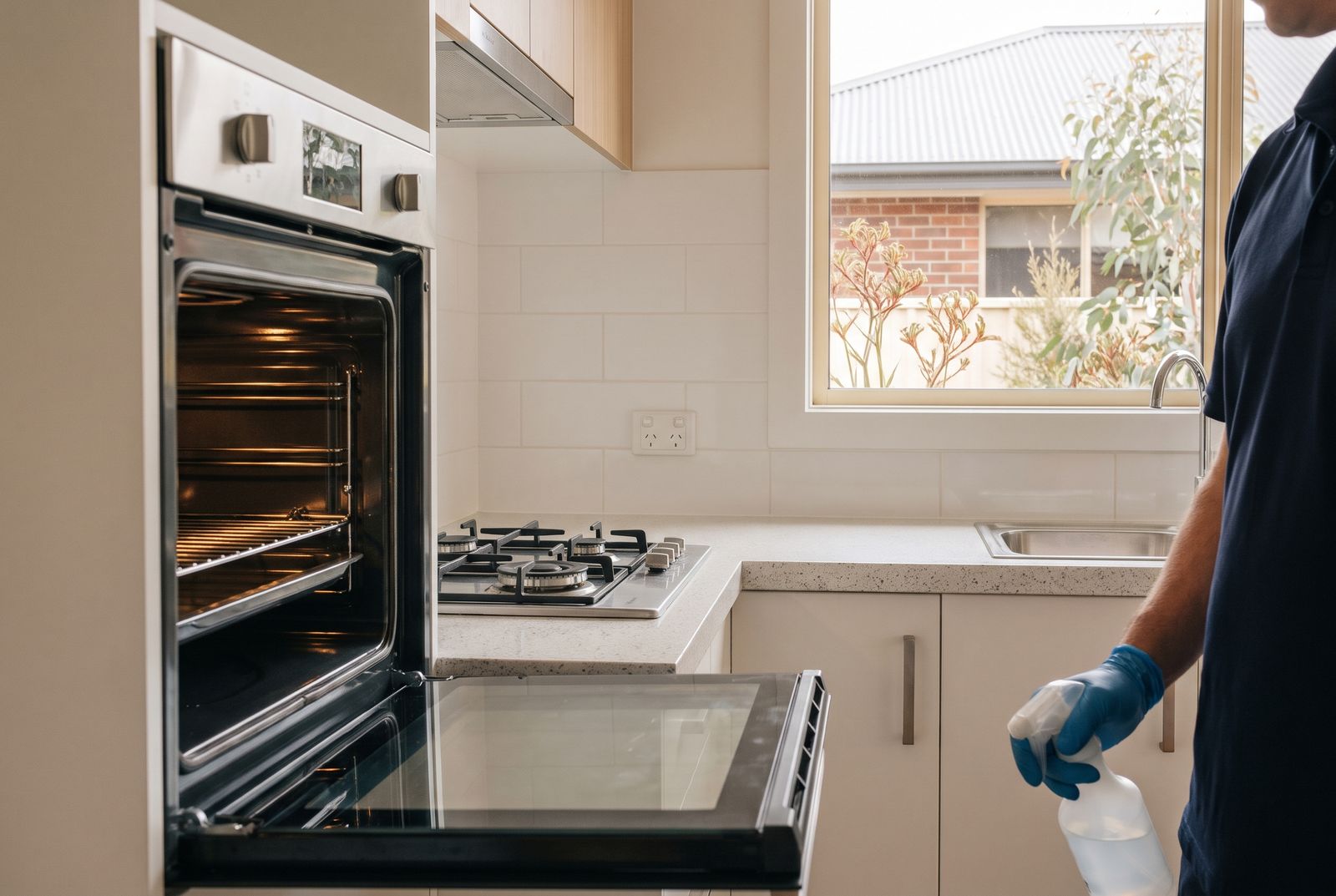
Oven cleaning
Need an oven cleaner? Hear back within the hour.
Single, double or a freestanding cooker. Tell us about your oven and one verified local oven cleaner gets in touch.
- Licence checked and insured
- Verified by Home Ready Cleaning
- Matched with an oven cleaning specialist
From 500+ reviews
Checked before they get your job
- Back within the hourA local oven cleaner gets back to you within the hour.
- Licence checkedWe check each business's licence before it gets jobs.
- InsuredEvery business we pass jobs to is insured.
- Verified by Home Ready CleaningLook for the badge. Only verified businesses get your job.
What an oven clean typically covers
Every cleaner works their own way, so confirm the steps when they call. These are the steps most oven cleaners list for a standard clean, and what a barbecue clean usually covers if you add one.
Inside the oven
- Walls, roof and floor treated and degreased
- Baked-on carbon softened, scraped and wiped out
- The fan cover and the area behind the fan
- Around the elements and the oven light cover
- Rinsed and wiped so no product is left behind
Racks and trays
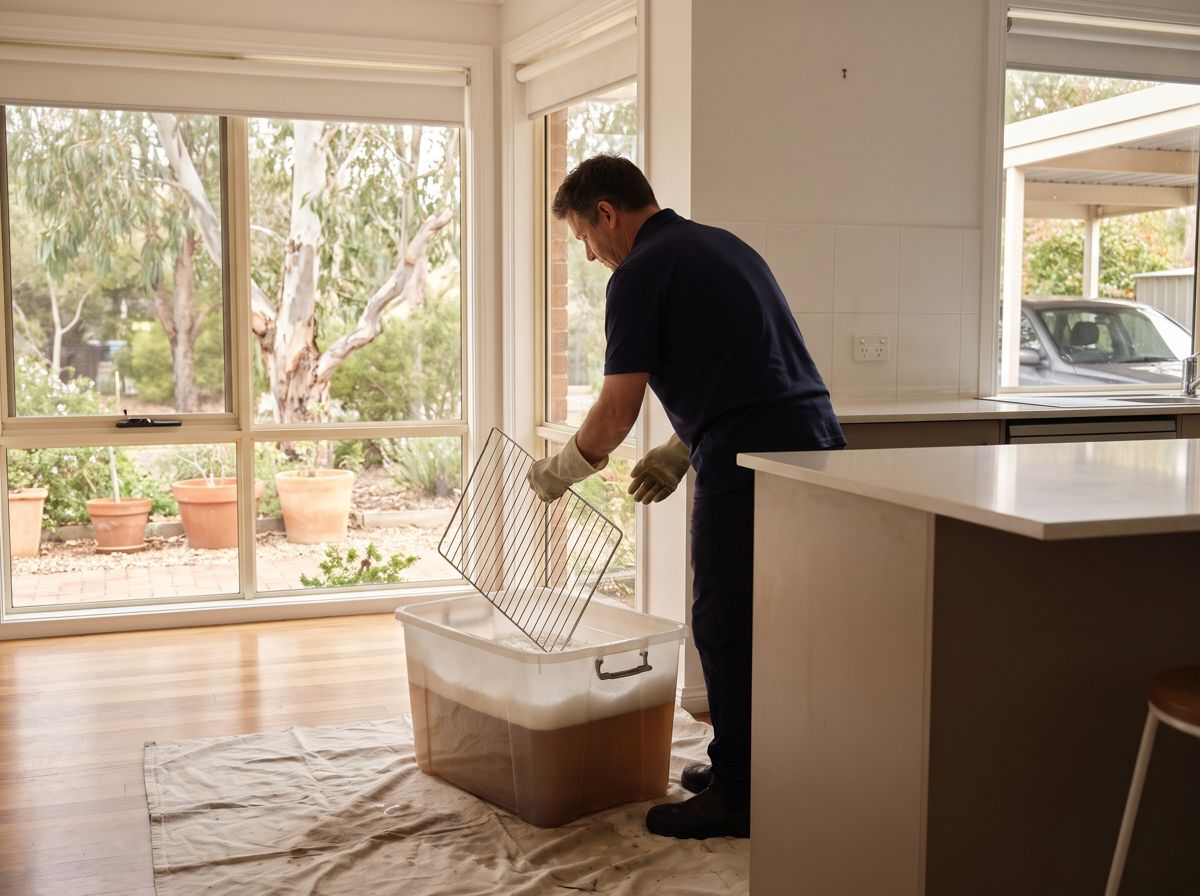
- Racks, trays and side rails taken out
- Soaked to loosen baked-on grease and carbon
- Scrubbed, rinsed and dried
- Put back once the oven is clean
Door, glass and outside
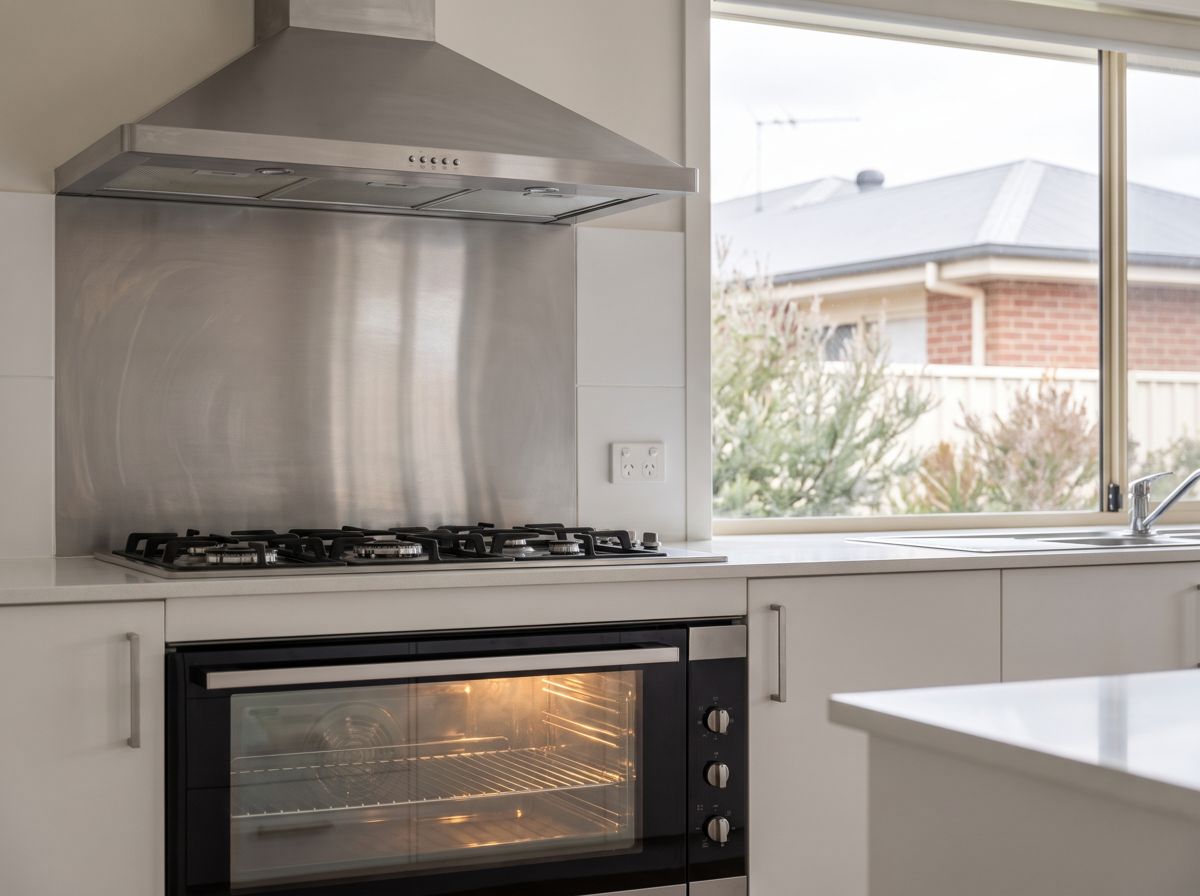
- Door taken off where the design allows
- Glass cleaned on both sides
- Between the panes, where the glass comes apart
- Door seal, handle and knobs wiped
- Oven put back together and turned on to test
- Floor and benches around the oven wiped
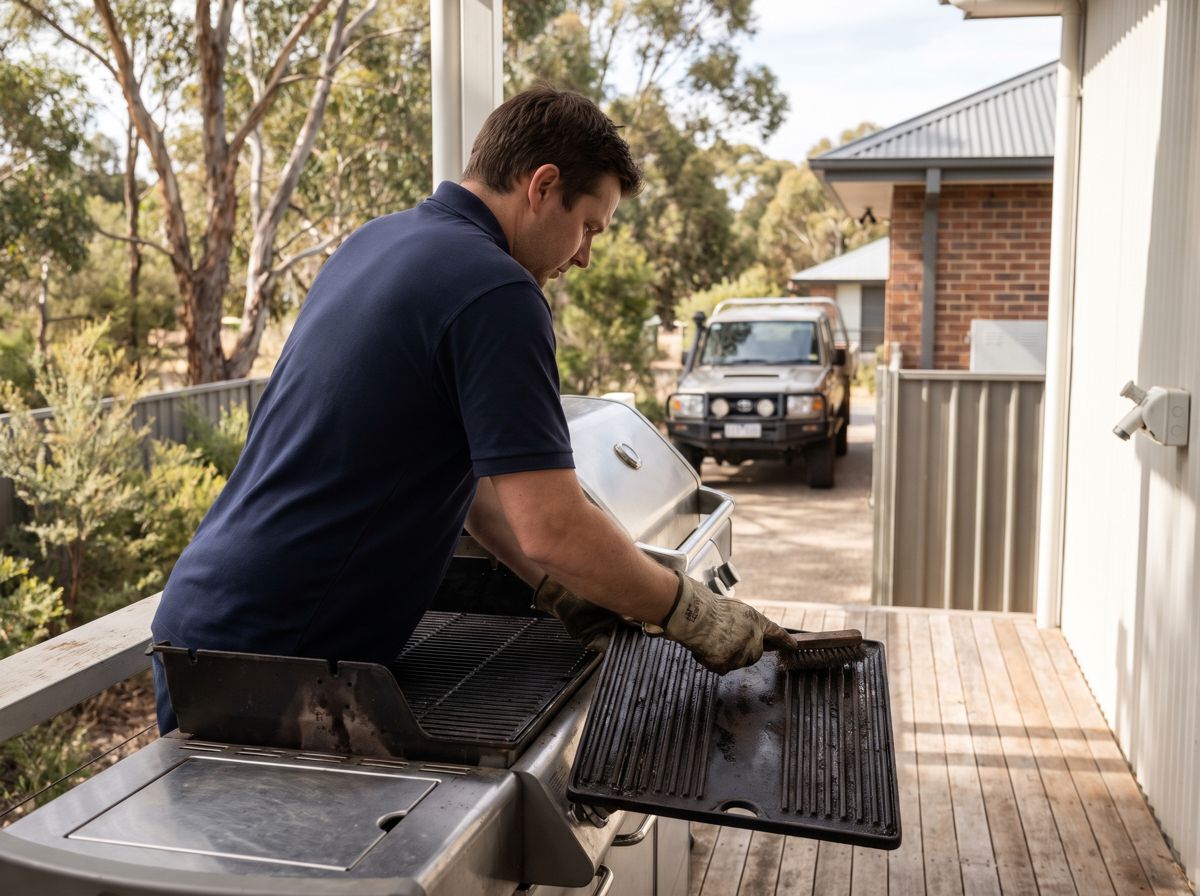
Barbecue, if you add one
- Grills and hotplates scrubbed or soaked
- Burners cleared of grease and food
- Hood degreased inside and out
- Drip tray cleaned
- Outside of the barbecue wiped down
Sometimes included
On some cleaners' lists and not others. Ask when you book.
- The cooktop on a freestanding cooker
- A warming drawer under the oven
- Extra racks and trays beyond the usual set
- Replacing a blown oven light globe
- Non-caustic, low-fume products
- A protective mat on the oven floor
Popular add-ons
Typical price range for each.
- Cooktop$30 to $130
- Rangehood$30 to $130
- Separate grill compartment$50 to $80
- Microwave$30 to $80
- Inside the fridge$50 to $200
- Barbecue$80 to $400
Not part of an oven clean
These are separate jobs, or are left out of a standard oven clean.
- Repairs to elements, fans, thermostats or wiring
- Burnt-through enamel or permanent stains
- Glass panels sealed into the door
- Carbon rangehood filters, which need replacing
- The rest of the kitchen, which is a deep clean
- Greasy paving around the barbecue
Dip tank, in place or a self-cleaning touch-up?
Three ways an oven gets cleaned. Ask which method the cleaner uses when you compare prices.
Dip-tank clean
Racks, trays, side rails and often the door parts go into a heated tank of cleaning solution while the oven is cleaned inside. Soaking lifts baked-on carbon that hand scrubbing struggles with. Oven specialists often work this way.
Clean in place
The racks soak in a tub or bag in the kitchen while the oven and door are cleaned by hand. Many general cleaners do an oven this way as part of a bigger clean, such as an end of lease clean. Ask how they handle heavy carbon.
Self-cleaning oven touch-up
A pyrolytic oven burns off grease inside with its own cycle. The cycle does not clean the inner door glass or the seal, and the racks often have to come out before it runs. Run the cycle, then book a cleaner for the racks, glass and seals. It usually costs less than a full clean.
Dip tank, clean in place or self-clean: how to choose
The build-up and the type of oven usually decide which clean suits you.
Heavy carbon or light build-up
A dip-tank clean is best for heavy build-up. The racks, trays and often the door parts soak in a heated tank, which lifts baked-on carbon that hand scrubbing struggles with. Light to moderate build-up usually suits a clean in place, with the racks soaked in a bag or container on site. General cleaners may not have a dip tank, so ask how they handle heavy carbon.
A self-cleaning oven
A pyrolytic self-clean cycle typically runs for 2 to 3 hours. It does not clean the inner door glass, the seal, the door frame or racks that are not pyrolytic-safe, and many makers want the racks out first. Do not run it right before the visit, so the oven is fully cool when the cleaner arrives. You may then only need the racks, glass and seals cleaned.
Rangehood and barbecue cleaning: what each needs
Most oven cleaners also clean rangehoods and barbecues, and each has its own parts and limits.
Rangehood filters and fan
Mesh or baffle filters usually come out and soak in degreaser, often in a heated tank, while the canopy and fan are degreased by hand. A professional clean reaches the fan and the inside of the hood, not just the filters. A 90 cm or wider hood usually costs more than a 60 cm one, as there are more filters and more canopy to degrease.
Undermount, slide-out and ducted hoods
Undermount and slide-out hoods keep much of their grease out of sight, so the filters and fan housing are where the work is. If the hood no longer clears the steam, some specialists clear the duct as far as they can reach and check the outside vent, usually quoted after a look. Running a new duct outside for a hood that recirculates is a separate job.
Barbecues: strip-down, steam or built-in
For a BBQ that smokes or flares up, a full strip-down soaks the grills, plates, flame tamers and racks in degreaser, clears the burner ports and scrapes out the base. Some specialists clean in place with dry steam, and some add a gas safety check or repairs, so ask what is included. Built-in and premium BBQs are usually quoted after a photo or a look.
Barbecue hoods, rust and coated parts
The brown or black flakes inside a hood are usually built-up carbon and fat, not peeling paint, and they can drop onto food. They clean off. Rust that has already eaten into the metal is left out of a BBQ clean, and some businesses do not clean non-stick, tin or aluminium parts. Tell the cleaner about rust or cracked parts before they start.
Estimated oven cleaning prices
Oven cleaning is usually priced by the oven, so its size and type set most of the cost. These are estimates of what to expect. Every business sets its own price.
| Oven | Usual time | Estimated price |
|---|---|---|
| 60 cm single oven | 45 minutes to 3 hours | $80 to $230 |
| 90 cm wide oven | 1 to 3 hours | $130 to $270 |
| Double oven | 1.5 to 3 hours | $140 to $420 |
| Freestanding cooker or range | 1.5 to 4 hours | $150 to $370 |
| Oven, cooktop and rangehood | 2 to 4 hours | $240 to $400 |
Estimates only, for an oven in fair condition. The last row is a standard oven with a 4 burner cooktop and its rangehood. Heavy build-up, a separate grill or a large range can cost more. Every business sets its own price. Estimates checked on 12 November 2026.
What moves the price
- Oven size
- A 90 cm oven usually costs more than a standard 60 cm oven, and a double oven more again, as there is more to take apart and clean.
- Build-up
- Years of baked-on carbon take longer to soak and scrape. Some businesses add a charge for it, while others charge the same whatever its condition.
- Separate grill
- A separate grill or a half-size second oven is usually charged on top of the main oven.
- Bundling
- Adding the cooktop or rangehood to the same visit usually costs less than booking each one on its own.
- Gas cooktops
- Gas cooktops and ranges can cost a little more, as the burner caps, grates and trivets all come off to be cleaned.
- Travel and timing
- Some businesses add a travel fee if you live outside their usual area, and urgent or same-day bookings can cost more.
When you may not need oven cleaning
Six cases where an oven clean is not required, or is not the right job.
The oven is not working
Repairs to elements, fans, thermostats or wiring are not part of an oven clean. A clean is not an appliance repair, and oven repair is a separate job. Tell the cleaner about cracked glass, loose seals or broken knobs before they start.
The marks are damage, not grease
Burnt-through enamel cannot be restored, so it is left out of an oven clean. Scratched enamel, melted foil marks and permanent staining may also remain after a clean.
The whole kitchen is greasy
Grease on cupboards, walls and the rest of the kitchen is left out of a standard oven or rangehood clean. The rest of the kitchen is a deep clean, booked as its own job.
Deep cleaningOnly the carbon filters need changing
A recirculating rangehood has carbon filters as well as grease filters. Carbon filters are generally not washable and are often replaced every 3 to 4 months, a part you buy rather than a clean. New ones usually cost about $50 to $60, and some cost more than $200.
The paving under the barbecue is greasy
Greasy paving under or around the BBQ is left out of a BBQ clean. It is a pressure washing job, booked as pressure cleaning. If you book one, move the BBQ off the area being cleaned first.
Pressure cleaningThe gas hose, regulator or bottle needs work
Replacing gas hoses, regulators or bottles is left out of a BBQ clean. Gas fitting work is a job for a licensed gasfitter. Fire Rescue Victoria advises a soapy water test of the connection each time, and Fire and Rescue NSW says never check for leaks with a naked flame.
End of lease, deep and house cleaning with the oven
When the oven is done as part of another clean, and when it is booked on its own.
End of lease cleaning
An end of lease clean typically covers the oven inside and out, with racks and trays, and degreases the stovetop and rangehood, with the filter cleaned. Many general cleaners clean the oven in place. Heavy build-up may need a dedicated oven clean, so ask whether it costs extra. The rangehood filter is among the first things an agent checks at a final inspection.
Deep cleaning
A deep clean resets a home you are living in, and a kitchen and bathroom deep clean puts the time where grease builds up, such as the cooktop, rangehood and splashback. Some set prices include the oven and rangehood. Others list them as extras, with inside the oven typically $40 to $150 where it is not included, so a lower price can mean less work.
House cleaning
A regular clean typically wipes the fronts of the oven, fridge and dishwasher, and skips inside the oven. A deep or spring clean adds inside the oven and fridge. Before a rental inspection, cleaners ask for two to three days notice, so book a one-off clean as soon as the notice arrives and add the oven if it needs it.
What to expect when the oven cleaner comes
How an oven cleaning visit usually runs, from the drop sheet to the test run.
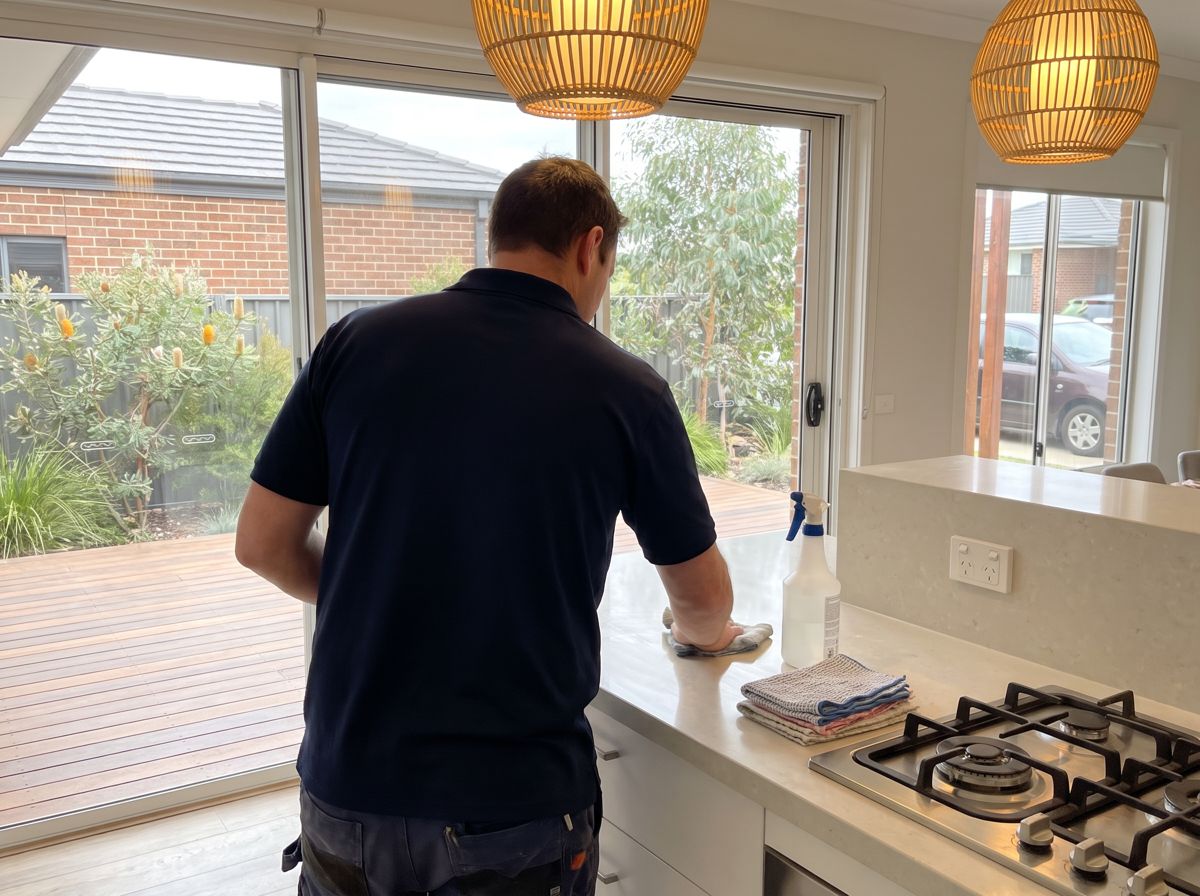
How long it takes
A standard single oven usually takes 1 to 2 hours. A double oven, a large range or heavy build-up can take 3 to 4 hours.
Floor and benches covered
Most cleaners lay a drop sheet or mat in front of the oven and cover nearby benches before they start.
Racks out to soak
Specialists often soak the racks, trays and door parts in a heated tank. Others soak them in a tub in the kitchen.
The door and glass
Where the design allows, the door comes off and the glass is split to clean between the panes. Sealed panels are left in place.
Products and fumes
Many specialists use non-caustic products. Others use caustic ones with gloves and care. Ask which they use if you have kids, pets or asthma.
The test run
Once the oven is back together, most cleaners turn it on to check it works. With non-caustic products it can usually be used the same day.
Six things that get you a better oven clean
A few minutes of prep means the visit goes on your oven, not on clearing space.
- Let the oven coolDo not use the oven right before the visit, so it is fully cool when the cleaner arrives.
- Empty it outTake out cookware, foil, pizza stones, thermometers and anything else stored inside that is not part of the clean.
- Clear the benchesMove things off the benches beside the oven and keep the path into the kitchen clear, so there is room to work.
- Mention accessMention stairs, lifts or locked gates when you book, as they can add time to the visit.
- Mention any faultsTell the cleaner about cracked glass, loose seals, broken knobs or a blown light before they start.
- Send a photoA photo of the open oven and one of the racks helps the cleaner price the job before the visit.
What to ask an oven cleaner before you book
Every business works its own way. These questions show what your price covers.
- Do you charge more for heavy build-up?Some businesses add a charge for years of baked-on carbon, while others charge the same whatever its condition. A photo of the open oven and one of the racks helps the cleaner price it before the visit.
- Is the cooktop on my freestanding cooker included?Some businesses include it where the cooktop is part of the cooker, and some charge the oven and stovetop at the same price as the oven alone. Others price it as an add-on to the same visit.
- Are a warming drawer, extra racks or a blown light globe covered?These are on some cleaners' lists and not others, so ask before you compare prices. Some leave the light globe out unless it is confirmed first.
- Which products do you use, and when can I cook again?Many specialists use non-caustic products, and the oven can then usually be used the same day. Others use caustic ones, so say if you have kids, pets or asthma.
- Is there a minimum booking for a rangehood on its own?Some businesses have a minimum booking, so a rangehood on its own can cost more. Added to an oven clean, a rangehood often costs less than booked on its own.
- How do you price the barbecue, and is it less with the oven?BBQ cleaning is usually priced by the size of the BBQ and its number of burners. Some businesses take money off when the BBQ and the oven are cleaned on the same visit.
- What training do you have?Oven cleaning is not a licensed trade. A Certificate III in Cleaning Operations is one training mark to ask about, along with how long they have been in business.
Oven cleaning: your questions answered
Straight answers on price, time, dip tanks, self-cleaning ovens and moving out.
How much does oven cleaning cost?
As an estimate, an oven clean runs $80 to $230 for a standard 60 cm single oven, $130 to $270 for a 90 cm wide oven and $140 to $420 for a double oven. Heavy build-up, a separate grill and extras like the cooktop or rangehood can add to it, and every business sets its own price. Tell us about your oven and a local oven cleaner gets in touch.How long does an oven clean take?
A standard single oven usually takes 1 to 2 hours, and up to 3 hours with heavy build-up. A double oven usually takes 1.5 to 3 hours. Adding the cooktop and rangehood can stretch the visit to 2 to 4 hours.Can I use the oven straight after the clean?
Usually, yes. With non-caustic products the oven can be used the same day, and most cleaners turn it on at the end to check it works. If you need it that night, say so when you book and ask which products they use.What is a dip tank?
A heated tank of cleaning solution. Racks, trays and other removable parts soak in it while the oven itself is cleaned, which lifts baked-on carbon that scrubbing struggles with. Not every business has one, so ask about it when you compare prices.Will they clean between the door glass?
Most cleaners take the door off where the design allows and split the glass to clean between the panes, where brown streaks build up. Some charge a little extra for it. Glass that is sealed into the door is not forced apart.I have a self-cleaning oven. Do I still need a clean?
A pyrolytic self-clean cycle burns off grease inside the oven, but it does not clean the inner door glass or the door seal, and the racks often have to come out before it runs. Many owners run the cycle and book a cleaner for the racks, glass and seals, which usually costs less than a full clean.Are the products safe for kids and pets?
Many oven cleaners use non-caustic, biodegradable products and say they are safe around kids and pets. Others use caustic products, which cut through carbon well but need gloves and care. Ask which they use, and mention asthma or allergies when you book.How often should an oven be professionally cleaned?
For most homes, every 6 to 12 months. Light use can stretch to 12 to 18 months, and heavy use may need a clean every 3 to 6 months. Fire services advise keeping the oven, rangehood and grill clear of built-up grease, which can catch fire.Can they clean the barbecue, cooktop and rangehood too?
Most oven cleaners also clean cooktops, rangehoods and barbecues, and some do microwaves. Adding them to the same visit usually costs less than booking each on its own. A barbecue clean typically runs $80 to $400, depending on its size and condition.I am moving out of a rental. Should I book an oven clean?
The oven is one of the first things checked at a final rental inspection, and a common cause of bond disputes. If your end of lease clean already covers the oven, ask whether heavy build-up costs extra before you book a separate clean. Keep the receipt with your bond paperwork.Do I need to be home?
It helps to be there at the start to show the cleaner the oven and point out any faults, and at the end to look it over. In between, you can usually get on with your day, and the rest of the kitchen stays usable.Are oven cleaners insured?
Every business we pass jobs to is insured and checked before it gets jobs. Oven cleaning is not a licensed trade, so it is fair to ask about training and how long they have been in business.Can I put rangehood filters in the dishwasher?
Some manuals allow it, though some warn the filters may discolour. Some cleaners say a dishwasher can strip the coating from an aluminium mesh filter and spreads grease through the machine, so check your manual first. Carbon filters cannot be washed at all.How often should the rangehood filters be cleaned?
The grease filters are best cleaned about every 1 to 2 months, depending on how much greasy food you cook. Some cleaners suggest a professional deep clean of the whole hood about once a year for a family kitchen that cooks most nights.How much time does a rangehood add to an oven clean?
Added to an oven clean, a rangehood usually adds about 30 minutes. On its own it usually takes 30 minutes to an hour, and a 90 cm or wider hood, or one with heavy grease, can take up to 2 hours.Can we cook on the barbecue straight after the clean?
Usually, yes. Many BBQ cleaners say it can be used once they leave. Some suggest running it on high for about 10 minutes before the first cook, to burn off any residue. Many use non-caustic, biodegradable or food-safe products, and others use stronger degreasers, so ask which they use.Do I need to be home for a barbecue clean?
Not always. Many cleaners only need access, such as a side gate code, plus a tap and power point. Leave the gas bottle connected with some gas in it, so they can test the burners at the end. A balcony BBQ needs room to work and water nearby.Oven cleaning by city and town
Pick your city or town to send the job to a local oven cleaner there. These are the most searched places.
Victoria
New South Wales
South Australia
Western Australia
Northern Territory
Types of oven cleaning
Oven cleaning costs and guides
Oven cleaning by type
Official sources
Checked on 12 November 2026.
- Fire and Rescue NSW, Cooking fire safety
- Fire Rescue Victoria, Home fire prevention
- CFA (Country Fire Authority), Kitchen
- Queensland Fire Department, Appliance fire safety
- Metropolitan Fire Service, Cooking Safety
- Department of Fire and Emergency Services, Preventing a fire in the home
- Tasmania Fire Service, Kitchens and cooking
- ACT Emergency Services Agency, Home Fire Safety
- Fire and Rescue NSW, Barbeque fire safety
- Fire Rescue Victoria, BBQ safety
Ready when you are.
Tell us the job once. One verified local oven cleaner gets back to you within the hour.
Get my oven cleaned →