

Pressure cleaning
Need a pressure cleaner? Hear back within the hour.
Driveways, paths, decks, walls or the roof. Tell us what needs cleaning and one verified local pressure cleaner gets in touch.
- Licence checked and insured
- Verified by Home Ready Cleaning
- Matched with a pressure cleaning specialist
From 500+ reviews
Checked before they get your job
- Back within the hourA local pressure cleaner gets back to you within the hour.
- Licence checkedWe check each business's licence before it gets jobs.
- InsuredEvery business we pass jobs to is insured.
- Verified by Home Ready CleaningLook for the badge. Only verified businesses get your job.
What a pressure clean typically covers
Every cleaner works their own way, so confirm the steps when they call. These are the jobs most cleaners list for each part of the outside of a home.
Driveways and paths
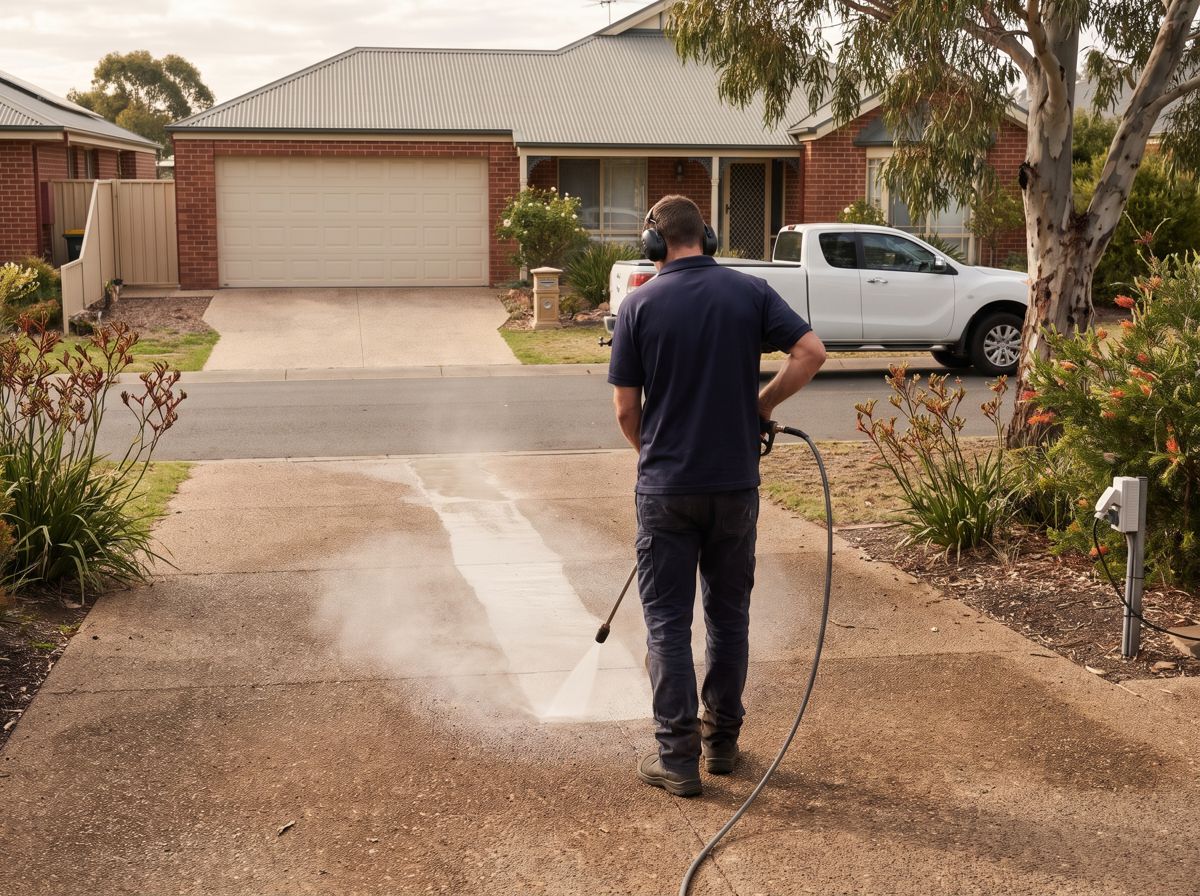
- Dirt, grime, moss and algae washed off
- Pressure set to suit concrete, pavers or aggregate
- A spinning surface cleaner on flat concrete
- Stains checked, with a heads-up on any that may stay
- Garden edges rinsed and a final rinse of the area
Patios, decks and pool areas
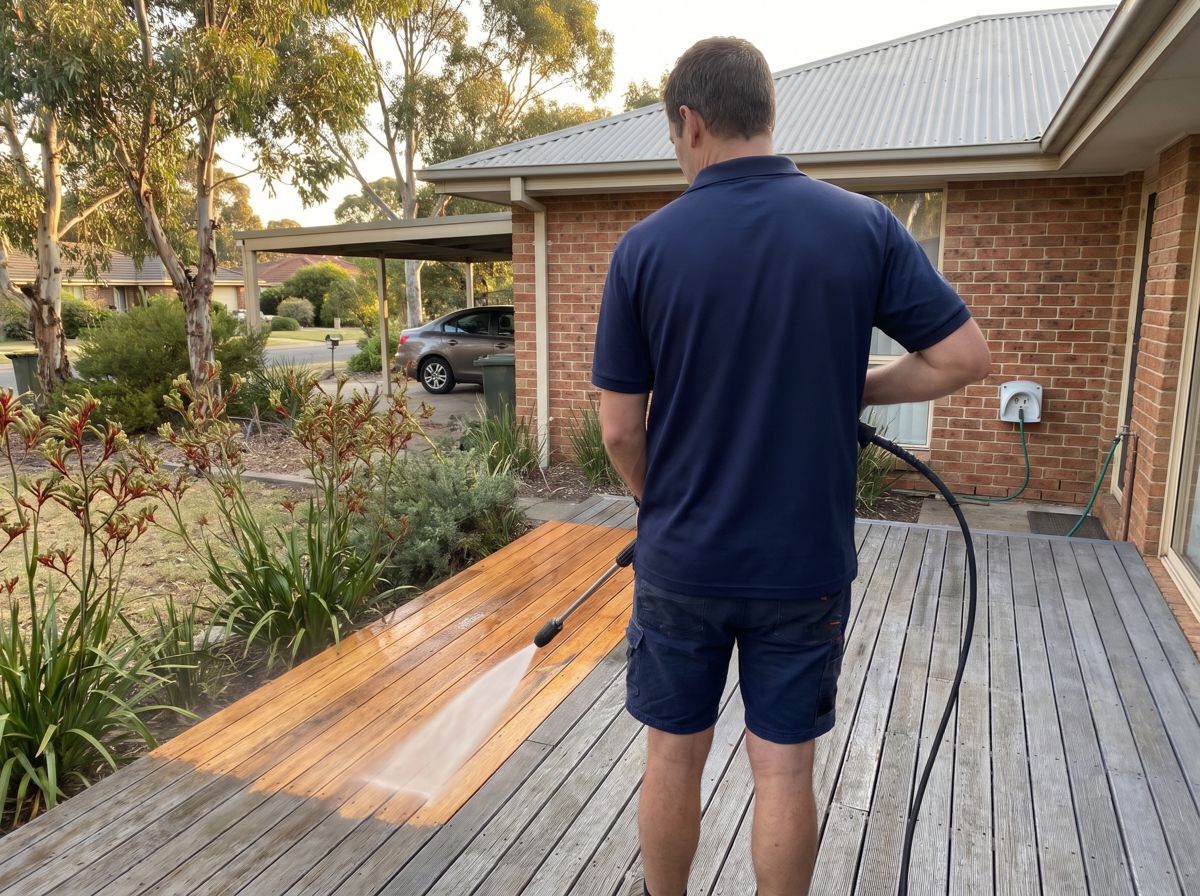
- Mould and algae treated, then washed off
- Lower pressure on grout and paver joints
- Wash water kept out of the pool
- Timber decks done at low pressure, along the grain
- Decks left clean and ready for oiling
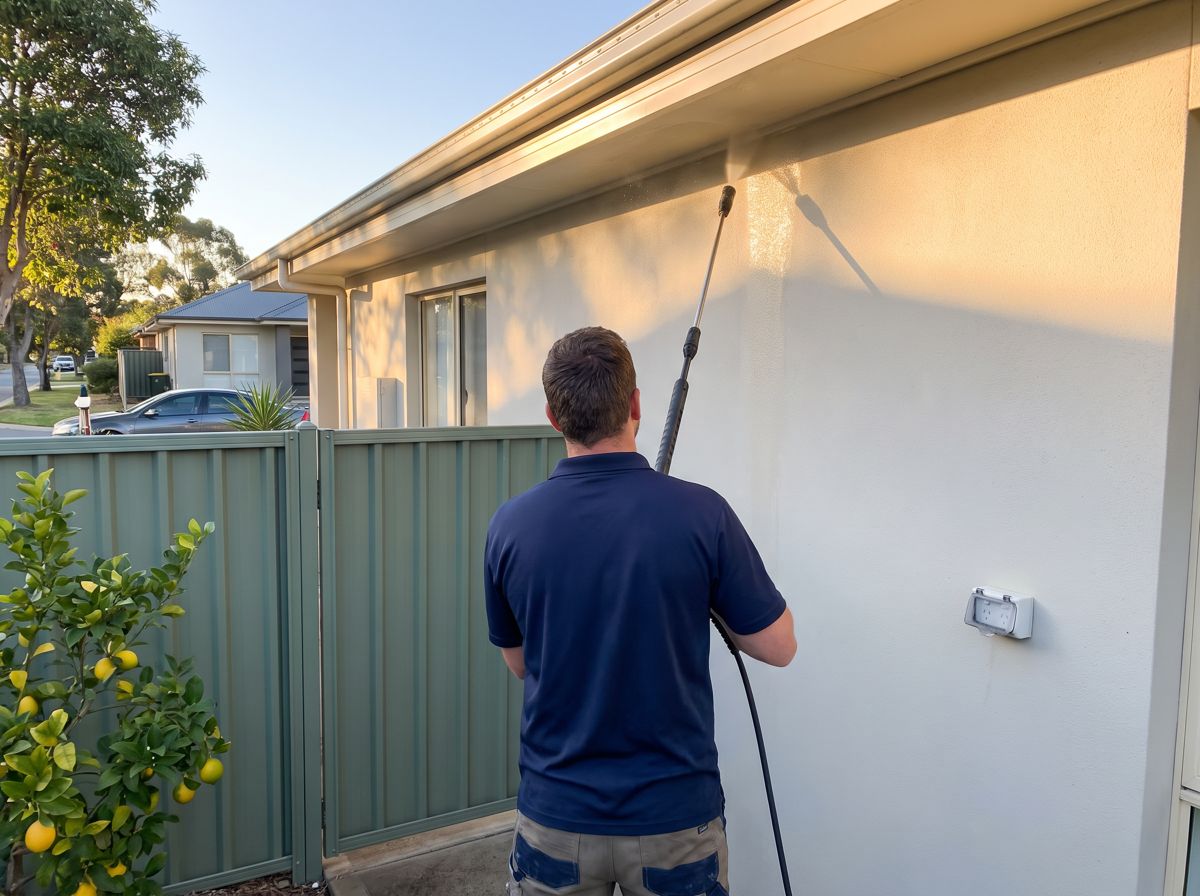
House walls
- Plants and power points protected first
- Walls soft washed at low pressure
- A solution that kills mould and algae
- Washed from the top down, then rinsed
- Eaves and fascia done with the walls
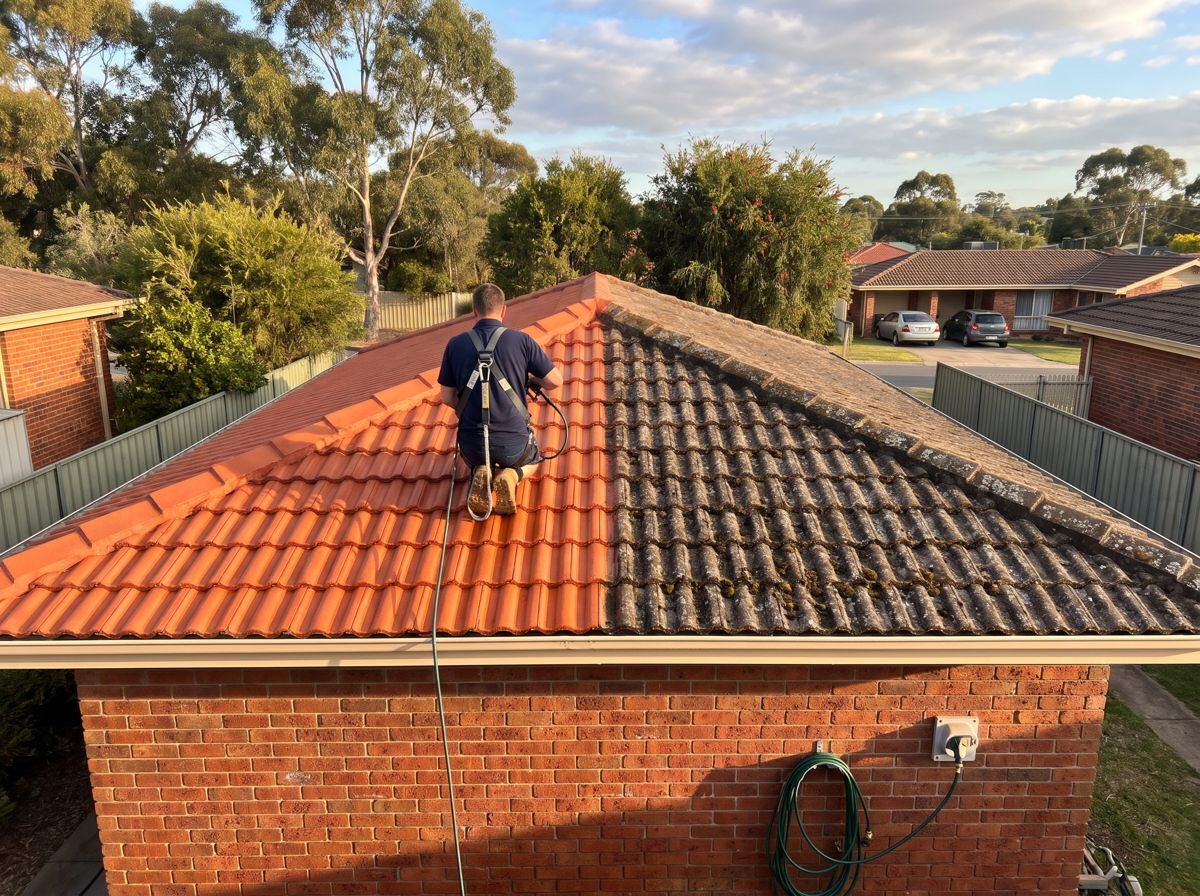
Roofs
- A check of the roof material and condition
- Moss, lichen and grime treated and rinsed off
- Pressure or soft wash to suit the roof
- Done before the walls and paths below it
Sometimes included
On some cleaners' lists and not others. Ask when you book.
- Hot water for oil and grease
- Exterior window frames
- Gutter faces and downpipes
- Cobwebs brushed off the eaves
- A gutter flush after a roof clean
Popular add-ons
Typical price range for each.
- Oil stain treatment$30 to $300
- Treatment to slow regrowth$50 to $400
- Sealing, per square metre$5 to $45
- Gutter clean, with a roof clean$100 to $450
- Outside windows, with a house wash$80 to $250
- Fence, per metre of one side$4 to $21
Not part of a pressure clean
These are separate jobs, or are left out of a standard clean.
- Asbestos cement or fibro roofs, walls and fences
- Oiling or staining a timber deck
- Re-sanding paver joints
- Fixing cracked concrete, render or tiles
- Graffiti and chewing gum removal
High pressure or soft wash?
Two main ways to clean outdoor surfaces, plus a gentler wash for timber. A good cleaner picks the method for each surface, so ask which one each part of your job gets.
High pressure clean
Water at high pressure, often through a spinning surface cleaner, lifts dirt, moss and grime from hard ground. Pavers and exposed aggregate get a lighter touch so the joint sand and stones stay put. Oil stains usually need a treatment as well.
Soft wash
A solution that kills mould, algae and lichen goes on at low pressure, is left to work, then is rinsed off. It suits painted walls, render, weatherboards, eaves and most roofs, where high pressure can strip paint, chip render or damage tiles. Some staining fades over the next few weeks of rain.
Deck clean
A deck cleaner does the lifting, with a low setting and a wide fan tip moved along the grain. Too much pressure lifts the soft timber and leaves a furry surface that needs sanding before oiling. Oiling or staining is a separate job.
Driveways, paths, pools and decks: what each surface needs
Most cleaners set the pressure and products by the surface, so say what yours is made of.
Exposed aggregate
Most cleaners wash exposed aggregate at lower pressure so the stones are not loosened, and take longer to lift the grime from between them, so it usually costs more than plain concrete. Many owners have it sealed to slow stains and regrowth.
Pavers and stencilled concrete
Pavers are usually washed at lower pressure so the joint sand stays put, but some sand can still wash out. Refilling the joints, often with a polymeric sand, is usually quoted as an extra. Say if the concrete is stencilled or coated, as it needs gentle washing.
Limestone, travertine and pool surrounds
Soft limestone and old brick pavers can be damaged by too much pressure, and travertine is usually given a low pressure soft wash. Around a pool, most cleaners keep wash water and products out of the pool. Tell the cleaner about any soft stone first.
Garage and carport floors
Oil and grease usually get a degreaser that is left to work, then a pressure wash, often with hot water and a rotary surface cleaner. Epoxy, painted and sealed floors need lower pressure. A floor with oil and tyre marks can take 2 to 5 hours.
Timber decks
Say whether the deck is merbau, treated pine, another hardwood or composite, as each needs a different touch. Merbau bleeds a dark red-brown tannin when wet, which can stain concrete, pavers and render nearby, so a tannin wash before oiling helps next to light surfaces.
Composite decks
Composite boards need no oil or sanding, and lower pressure than timber. One maker's care guide allows up to 1,500 PSI with a fan tip at least 200 mm away, and rules out chlorine bleach and turbo nozzles. The wrong method can void the warranty, so check your own maker's guide.
House walls and roofs: what each material needs
Walls and most roofs are usually soft washed, but each material needs its own care.
Render, paint and weatherboards
High pressure can chip render, strip paint, damage window seals and force water behind boards, so walls are usually soft washed. A mix that is too strong can still bleach surfaces and window frames, so ask what will go on each surface. Washing cannot fix flaking paint or cracked render.
Tiled roofs
Terracotta needs a gentler method, so it often costs a little more than concrete tiles. Sound concrete tiles can take higher pressure, but worn tiles can be stripped, and water aimed upward is forced under them. Most roof cleaners point out cracked or loose tiles first, and replacing them is a separate job.
Estimated pressure cleaning prices
Pressure cleaning is usually priced by the job or by the square metre, so the surface and its size set most of the cost. These are estimates of what to expect. Every business sets its own price.
| Surface | Usual time | Estimated price |
|---|---|---|
| Single driveway | 1 to 2 hours | $100 to $400 |
| Double driveway | 1 to 3 hours | $150 to $650 |
| Path, patio or pool surround | 1 to 4 hours | $100 to $700 |
| Timber deck | 1 to 2 hours | $150 to $600 |
| House wash, one storey | About half a day | $250 to $900 |
| Roof, one storey | 3 to 6 hours | $300 to $1,900 |
Estimates only, for one storey with easy access and normal dirt and growth. A single driveway is about 30 to 40 square metres and a double about 55 to 70. Oil stains, sealing, a second storey and steep or hard-to-reach areas add to it. Every business sets its own price. Estimates checked on 12 November 2026.
What moves the price
- Size
- Flat areas are often priced by the square metre, at about $2 to $12 on concrete and pavers, so a bigger area costs more.
- Minimum charge
- Most cleaners have a minimum charge of about $100 to $275, so a small path on its own costs more per square metre.
- Surface
- Plain concrete is quickest. Pavers, exposed aggregate, timber and painted walls need lower pressure and more care, so they usually cost more.
- Stains and growth
- Oil, rust, heavy mould and lichen need a treatment and extra time. Old oil stains often fade rather than disappear.
- Storeys and access
- A second storey, a steep block or tight side access adds time. A two-storey house wash usually costs about $400 to $1,400.
- One visit or several
- Doing the driveway, paths and patio in one visit usually costs less than separate bookings, as set-up and travel are paid once.
When you may not need pressure cleaning
Six cases where a pressure clean is not required, or is not the right job.
It could be asbestos cement
Using high pressure water spray on asbestos materials is illegal in every state, and so is using power tools or brooms on them in an uncontrolled way. If you are not sure, tell the cleaner when you book and have it tested first.
The concrete is cracked or sunken
A clean will not fix crumbling concrete, stepped cracks, sunken pavers or places where water pools. Fixing cracked or sunken concrete and re-laying loose pavers are separate jobs. Tell the cleaner about cracks and sunken pavers when you book.
The deck is grey or furry
Grey timber is sun-damaged fibre, and washing alone will not remove it. For an even colour, most grey decks need sanding before oil. That is a restoration, which usually takes 1 to 3 days and costs more than a clean.
The house is about to be painted
A soft wash two or three days before is the usual preparation, and many painters include it in their quote, so ask the painter before you book a separate wash.
The driveway is asphalt
Asphalt driveways are rarely pressure washed, and they are left out of a standard driveway clean. Say what your driveway is made of when you book.
The roof only needs upkeep
A spray-on treatment that kills moss, lichen and algae can be left on the roof, and the dead growth washes off with the rain over the following months. It is slow, so it suits upkeep between cleans more than a quick result.
Check your local water rules before you book
Rules on using water to clean driveways and paths differ by state, and in some states by town or water supplier.
- Some states limit hosing or pressure cleaning hard surfaces to set cases, such as a health or safety hazard. Check the rule where you live before you book.
- Ask the cleaner how they work within the water rules where you live.
- In South Australia, wash water must not go into the stormwater. Ask where the water from your job will go.
Window, BBQ and after builders cleaning with a pressure clean
When these jobs can share a booking with a pressure clean, and when they are separate.
Window cleaning
Outside windows are a popular add-on to a house wash, typically $80 to $250. Some house washes take in the window frames and a glass rinse, but detailed window cleaning may cost extra. Pressure cleaning is not part of a window clean, and is a separate job or quoted on its own.
Oven cleaning
A BBQ clean leaves out the greasy paving under the BBQ. That is a pressure washing job, booked on its own. Hot water for oil and grease is on some pressure cleaners' lists and not others, so ask for it when you book the paving.
After builders cleaning
Pressure washing is a popular add-on to an after builders clean, typically $4 to $7 a square metre. Driveways and paths caked in concrete slurry are a different job, left out of an after builders clean. In Victoria, drinking water can be used to clean hard surfaces during construction or renovation.
What to expect when the pressure cleaner comes
How a pressure cleaning visit usually runs, from set-up to the last rinse.
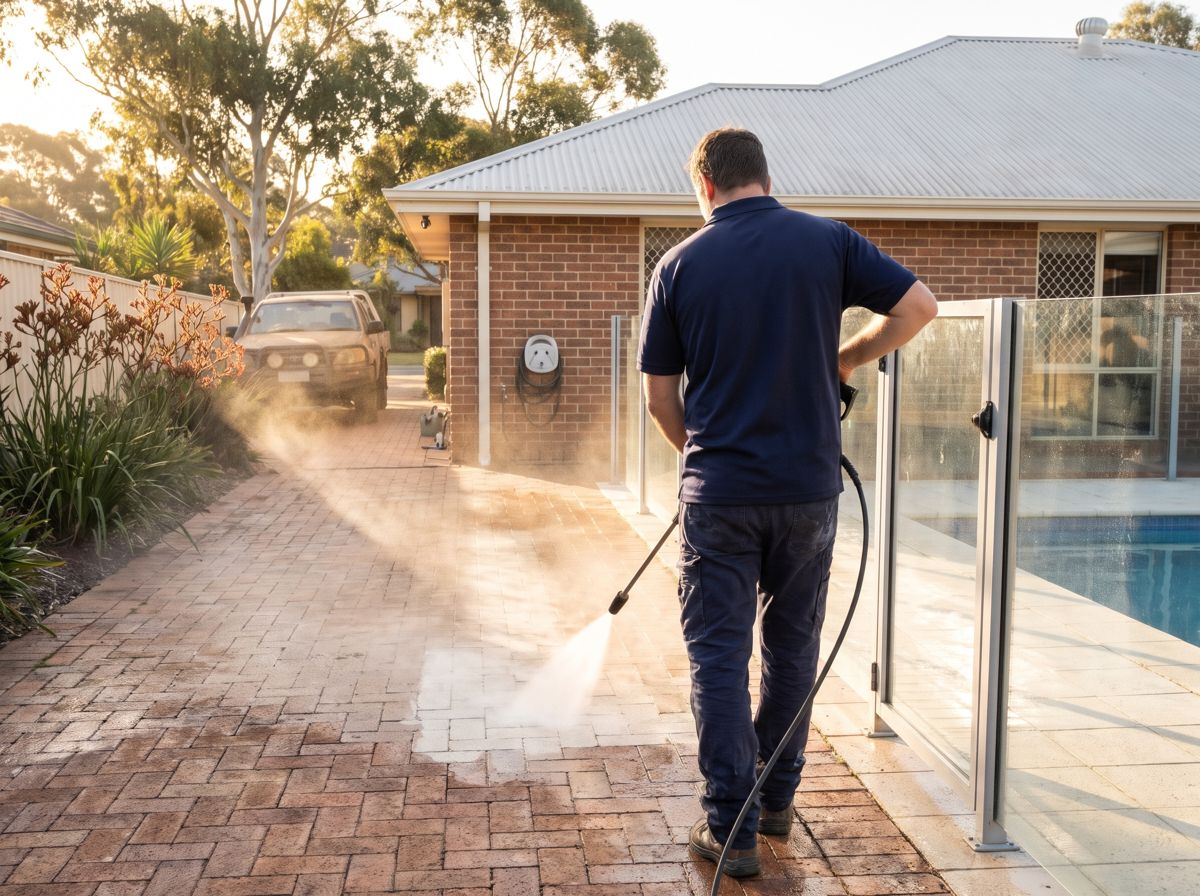
How long it takes
A double driveway usually takes 1 to 1.5 hours. A driveway, paths and patio take 2 to 4 hours, and a one-storey house wash about half a day.
Your outside tap
Most cleaners connect to your outside tap. Some bring their own water tank for homes without a tap near the work.
Treatment first
On mould, moss and lichen, a cleaning solution usually goes on first and is left to work before the wash.
Garden beds
A careful cleaner wets down or covers garden beds before any cleaning solution goes on.
Noise and spray
Expect noise from the machine while they work. On a roof job, spray and grit come off the roof edge.
Afterwards
Surfaces stay wet for an hour or two. After a soft wash, some staining can take a few weeks of rain to fade.
Six things that get you a better pressure clean
A little prep means the cleaner spends the visit cleaning, not moving things around.
- Clear the areaMove cars, bikes, bins, pot plants, outdoor furniture, the BBQ and doormats off the areas being cleaned.
- Close up the houseShut windows and doors on the side being washed, and check outdoor power points have covers.
- Pets and washingBring pets inside and take the washing off the line before the cleaner starts.
- Point out weak spotsTell the cleaner about loose pavers, cracked render, fresh paint, fish ponds or delicate garden beds.
- Check for fibroIf the roof, eaves, walls or fences could be fibro, say so when you book. It may contain asbestos, which must never be pressure cleaned.
- Selling? Book earlyBook a week or two before the listing photos, so surfaces are fully dry and any sealer has time to cure.
What to ask a pressure cleaner before you book
Every business works its own way, so ask what your price covers.
- What does the house wash price cover?One quote may cover the walls only, and another the gutters, fascia, eaves and window frames. Compare what each price covers.
- Is mould, moss and lichen treatment part of the price?It is on some cleaners' lists and not others. Shaded paths, limestone and pool surrounds grow moss and algae faster.
- Will you use a surface cleaner on the flat concrete?A wand held too close can etch stripes into concrete. A round spinning surface cleaner over the main area avoids them.
- What will you use on coloured concrete?Some mould treatments can bleach coloured concrete, so it usually gets gentle cleaning. Ask which product will go on it.
- Is a gutter flush part of the roof clean?Some cleaners include it and others price it as an add-on. Debris from the roof ends up in the gutters, so many people book both in one visit.
- How will you manage my rainwater tank?If the roof feeds a rainwater tank, say so when you book, so the tank connection can be assessed with the quote.
- Do you need water and power from the house?Many cleaners use your outside tap, and some bring their own water. No water or power on site can add a surcharge, so say if there is none near the work.
Pressure cleaning: your questions answered
Straight answers on price, time, the right method, roofs, asbestos and water rules.
How much does pressure cleaning cost?
As an estimate, a single driveway runs $100 to $400, a double driveway $150 to $650 and a one-storey house wash $250 to $900. Oil stains, a second storey, steep roofs and sealing add to it, and every business sets its own price. Tell us the job and a local pressure cleaner gets in touch.How long does pressure cleaning take?
A double driveway usually takes 1 to 1.5 hours, including set-up and rinse-down. A driveway, paths and patio take 2 to 4 hours. A house soft wash takes about half a day for one storey and most of a day for two, and a one-storey roof usually takes 3 to 6 hours.High pressure or soft wash: which do I need?
High pressure suits hard ground such as plain concrete and most pavers. A soft wash uses low pressure and a cleaning solution, and suits painted walls, render, weatherboards, eaves and most roofs. Timber decks need a low setting and a deck cleaner. Ask which method each surface on your job will get.Will pressure cleaning get oil stains out?
Often, but not always. Oil, rust and tyre marks need a treatment and extra time, usually about $30 to $300 on top. Old oil that has soaked deep into plain concrete often fades rather than disappears, so ask what result to expect.Can my roof be pressure cleaned?
Most roofs can be cleaned, but many are soft washed rather than blasted, as too much pressure can crack terracotta and strip worn concrete tiles. A one-storey roof is estimated at $300 to $1,900, and a two-storey or steep roof can cost about $550 to $2,800. Asbestos cement roofs must never be pressure cleaned.What if my home has fibro or asbestos?
Using high pressure water on asbestos materials is illegal in every state. It breaks up the surface and can spread fibres over your yard and your neighbours'. Older homes can have asbestos cement in the roof, eaves, walls or fences. If you are not sure, tell the cleaner when you book and have it tested first.Are there water rules for pressure cleaning?
The rules differ by state and territory.In NSW, each area follows its own local water rules, and they cover hosing driveways, paths and other hard surfaces. Check your council or water supplier's website for the rules where you live.
In Victoria, permanent water saving rules apply every day. Drinking water can only be used to clean driveways, paths or decks after an accident or emergency, for a health or safety hazard, during building work, or to remove staining once a season, and then with a high pressure cleaner if one is available.
In Queensland, water restrictions differ by region and water supplier. In Brisbane, supplied by Urban Utilities, restrictions are not in place. Seqwater asks people to sweep paths and paving instead of hosing them, and to spot clean for safety, health or emergency reasons with a trigger nozzle hose or high pressure cleaning equipment.
In South Australia, under the Environment Protection (Water Quality) Policy 2015, waste water from high-pressure cleaning must not go into the stormwater system, and a breach can bring a $300 fine. Ask the cleaner to send it onto your lawn or garden, not into the gutter.
In Western Australia, the Permanent Water Efficiency Measures apply statewide and include sprinkler watering rosters. Water Corporation, which supplies Perth, says to use a broom rather than a hose on driveways or paving for general cleaning. High pressure cleaners are not for general cleaning, and can only use the minimum water needed for health and safety cleaning.
In Tasmania, TasWater sets four stages of water restrictions and applies them area by area when supply is short. Check TasWater's water supply status for your area. When a restriction is in place, it applies to all residents, visitors and businesses there, and at every stage hosing or pressure cleaning concrete and other hard surfaces is limited to spot cleaning for safety, health, animal welfare or emergency reasons.
In the ACT, Icon Water's Permanent Water Conservation Measures are always in place in Canberra. You can clean driveways and other paved areas at any time with a bucket and mop or a high-pressure low-volume cleaner. Otherwise water can only be used to clean paved areas after an accident, fire, health hazard or other emergency, using the most water-efficient method reasonably available.
In the Northern Territory, water rules differ by town. In Katherine, compulsory water conservation measures mean no watering of hard surfaces such as concrete or paved driveways and footpaths. Check Power and Water's rules for your town before you book.
Some cleaners collect the dirty wash water instead of letting it run into the street drain, which can add to the price, so ask when you compare quotes.
Can pressure cleaning damage my home?
It can if the wrong method is used. Too much pressure can etch concrete, wash out paver sand, fur timber, strip paint and force water behind cladding or under roof tiles. Careful cleaners turn the pressure down or soft wash the softer surfaces, so ask how each part will be done.How often should I get it done?
Every one to three years suits most driveways and paths. Shaded, damp areas and pool surrounds can need it every year. A house soft wash every two to three years suits most homes, and most roofs need cleaning every two to six years, more often on shady or humid sites.Should I seal after a clean?
Sealing slows stains and regrowth, and usually adds about $5 to $45 a square metre. It suits coloured concrete, new pavers, pool areas and driveways where oil is a constant problem. On a plain grey driveway, a clean every couple of years usually costs less. Keep cars off a sealed driveway for at least 24 to 48 hours.Is there a minimum charge?
Most cleaners have one, usually about $100 to $275, to cover travel and set-up. Adding the paths, patio or bin area to a driveway clean in the same visit usually costs less than booking each on its own.Are pressure cleaners insured?
Every business we pass jobs to is insured and checked before it gets jobs. It is still fair to ask how they protect windows, paint and plants, and how long they have been in business.Do I need to be home for a pressure clean?
Often not. If the outside tap works, the gates are open and the cars are moved, many cleaners can do the job while you are out. For a roof or house wash, most only need the yard and an outside tap. Agree on this when you book.How long does a sealer last?
Depending on the product and the number of coats, about 1 to 10 years. One coat usually lasts about 1 to 3 years and two coats about 3 to 5. Concrete usually needs 24 to 72 hours to dry first, so a clean and seal is often two visits. A sealed surface can be slippery when wet.Will the moss and lichen come back?
Usually, in time, and on the shaded, damp side of a roof first. Shaded, damp walls, coastal homes and homes near trees go green sooner, sometimes within a year. A treatment after the clean slows regrowth, so ask how long the cleaner expects it to last.Can rust stains be removed?
Each rust stain usually needs its own treatment, often a rust remover, and stubborn spots can get a second go. Rust bleeding up from steel inside the concrete is not part of a clean, as cleaning will not fix it. On walls, rust may stay after a soft wash.Should the deck be oiled after the clean?
Most timber decks are oiled after a wash, as a clean strips away what is left of the old oil. If water splashed on the boards beads, the oil is still working. If it soaks in, the deck is due. Most cleaners let the timber dry 24 to 72 hours first, so it is often two visits.Pressure cleaning by city and town
Pick your city or town to send the job to a local pressure cleaner there. These are the most searched places.
New South Wales
Queensland
South Australia
Western Australia
Northern Territory
Types of pressure cleaning
Pressure cleaning by other names
Pressure cleaning costs and guides
Official sources
Checked on 12 November 2026.
- NSW Government, Water restrictions
- Victorian Government, Permanent water saving rules
- Seqwater, Water saving advice
- Urban Utilities, Water Security in South East Queensland
- Urban Utilities, Water restrictions
- EPA South Australia, Around the home
- Water Corporation, Using water outdoors do's and don'ts
- Water Corporation, Our Water Sources in Western Australia
- Water Corporation, Check Your Watering Days Perth and WA
- TasWater, Water restriction guidelines
- TasWater, Water supply status
- Icon Water, Permanent Water Conservation Measures, Rules for Residents
- Icon Water, Exemption from the Permanent Water Conservation Measures
- Power and Water Corporation, Katherine compulsory water conservation measures
- Asbestos and Silica Safety and Eradication Agency, The dangers of asbestos cement roofs
Ready when you are.
Tell us the job once. One verified local pressure cleaner gets back to you within the hour.
Get it pressure cleaned →