


Stain and smell guide
How to get furniture marks out of carpet
Furniture marks are dents in the pile, not stains. Fresh or shallow dents often lift with time, slow vacuuming, a little water and your fingertips. Deep dents left for years may never fully recover.
The short answer
Lift the furniture off and give the pile some time. Vacuum slowly over the dent from more than one direction. If it stays flat and the carpet maker's care guide allows water, put an ice cube in the dent, let it melt, then blot up the water. Work the fibres up with your fingertips to match the pile around them. Keep off it until dry, then vacuum.
What you need
- Vacuum cleaner
- Carpet maker's care guide
- Ice cubes
- Clean dry cloth or towel
- Phone camera
How to get furniture dents out of carpet
Start with the gentlest step, and stop once the dent has lifted.
- Lift the furniture off the dentLift and carry the furniture away rather than dragging it, which can snag fibres, stretch the backing or leave new marks. Some fibres recover once the weight is off. Give the carpet a little time, then check again in the same light.
- Vacuum slowly from more than one directionMove the vacuum slowly back and forth over the dent so the brush can lift the fibres, then go across it from another direction. Spend several minutes on each dent. This low-risk step works best on small to medium dents.
- Check the carpet maker's care guideBefore you use water, look up the care guide or warranty for your carpet, especially for wool or another natural fibre. Its instructions come before any home method. If they rule out water, stop at vacuuming.
- Put an ice cube in the dentPlace one ice cube in each small dent, or a few in a larger one, and let it melt completely. As it melts, the fibres take up the water and swell back towards their shape. Use no more ice than the dent needs, so the carpet is not soaked.
- Blot up the waterOnce the ice has melted and the carpet has taken up the water, press a clean, dry cloth or towel on the spot to soak up what is left. Do not leave water sitting in the dent.
- Lift the pile with your fingertipsWork the damp fibres up gently with your fingers until they stand like the pile around them and run the same way. Do not scrub or force them, as that can distort the fibres. If the dent is still there, repeat the ice steps.
- Let it dry, then vacuumKeep off the spot until it is completely dry, and keep furniture off it too, as legs on damp carpet can leave new compression marks and rust stains. Then vacuum over the area to even out the finish.
What you need to lift furniture dents
Gather these before you start.
Vacuum cleaner
A household vacuum. Moved slowly over the dent, its brush helps lift flattened fibres, and it evens out the finish once the spot is dry.
Carpet maker's care guide
The care guide or warranty for your carpet. Its instructions come before any home method that uses water or heat, especially on wool or another natural fibre.
Ice cubes
One for each small dent, or a few for a larger one. As the ice melts slowly, the fibres take up the water and expand.
Clean dry cloth or towel
A clean white cloth or towel that will not shed colour, to blot up the water once the ice has melted.
Phone camera
In a rental, photograph the dent and where the furniture stood before you start. Photos can help avoid disputes at the end of a tenancy.
Ice, heat and tools: where the guides disagree
Guides split on these. Here is each side, with its caution.
Ice on the carpet
Five guides put ice in the dent and let it melt, then blot and lift the pile, some after a couple of hours, some after a day. One warns that ice is not approved by every carpet maker and that water left in a dent can backfire or leave a mark. It advises against ice on carpet you do not know.
A steam iron over a cloth
Four guides press a steam iron on a cloth, often damp, laid over the dent, never straight on the carpet, for a few seconds up to a minute. A wool guide keeps to low or medium heat, never over 148 C. One guide advises against ironing, as high heat can distort or melt some synthetic fibres, scorch, alter dye or affect adhesives.
A hairdryer
Two guides dampen the dent and warm it with a hairdryer while working the fibres up with their fingers. Two advise against it: one says not on wool, as the heat can damage the fibres, and the other says synthetic fibres are not automatically heat-safe.
Spoons, coins and brushes
Guides lift the pile with a spoon, the edge of a coin, a fork or a wire brush. One warns against coins, knives, metal tools, wire brushes and sharp combs, as they can pull loops or fuzz the surface, and the damage can show more than the dent did.
Are furniture dents fair wear and tear in a NSW rental?
What NSW Fair Trading's rental page says about marks on carpet.
Dents are fair wear and tear
NSW Fair Trading lists furniture indentations and traffic marks on the carpet as fair wear and tear, which the tenant is not responsible for.
Stains and burns are damage
Stains or burn marks on the carpet are different: NSW Fair Trading lists those as damage, not fair wear and tear.
How to stop furniture dents coming back
Spread the weight, and give the pile a break now and then.
Shift heavy furniture now and then
Move heavy pieces slightly every few months, or rearrange the room now and then, so the same patch of pile is not pressed for years.
Spread the load under the legs
Put furniture cups, coasters or larger pads under heavy legs to spread the weight. They do not stop all compression, and one guide finds casters can make dents more pronounced. Felt pads or coasters under metal legs also help prevent rust marks.
When to call a professional
Call a professional if any of these apply.
- The dent is deep, old or will not liftDeep dents from heavy furniture left for years can need specialised techniques, and some may be permanent compression or wear. If careful home methods have not worked, stop and have it looked at.
- The carpet is wool, valuable or handmadeWool is delicate, and moisture, heat and friction can affect how it looks and performs. For valuable wool, or antique or handmade carpet, see a specialist rather than trying household tricks.
- The pile is damaged or the floor feels lowPulled loops, a worn or damaged patch, or a dent that still feels low once the fibres are lifted can mean damage or a compressed underlay. Cleaning is no substitute for a carpet repair.
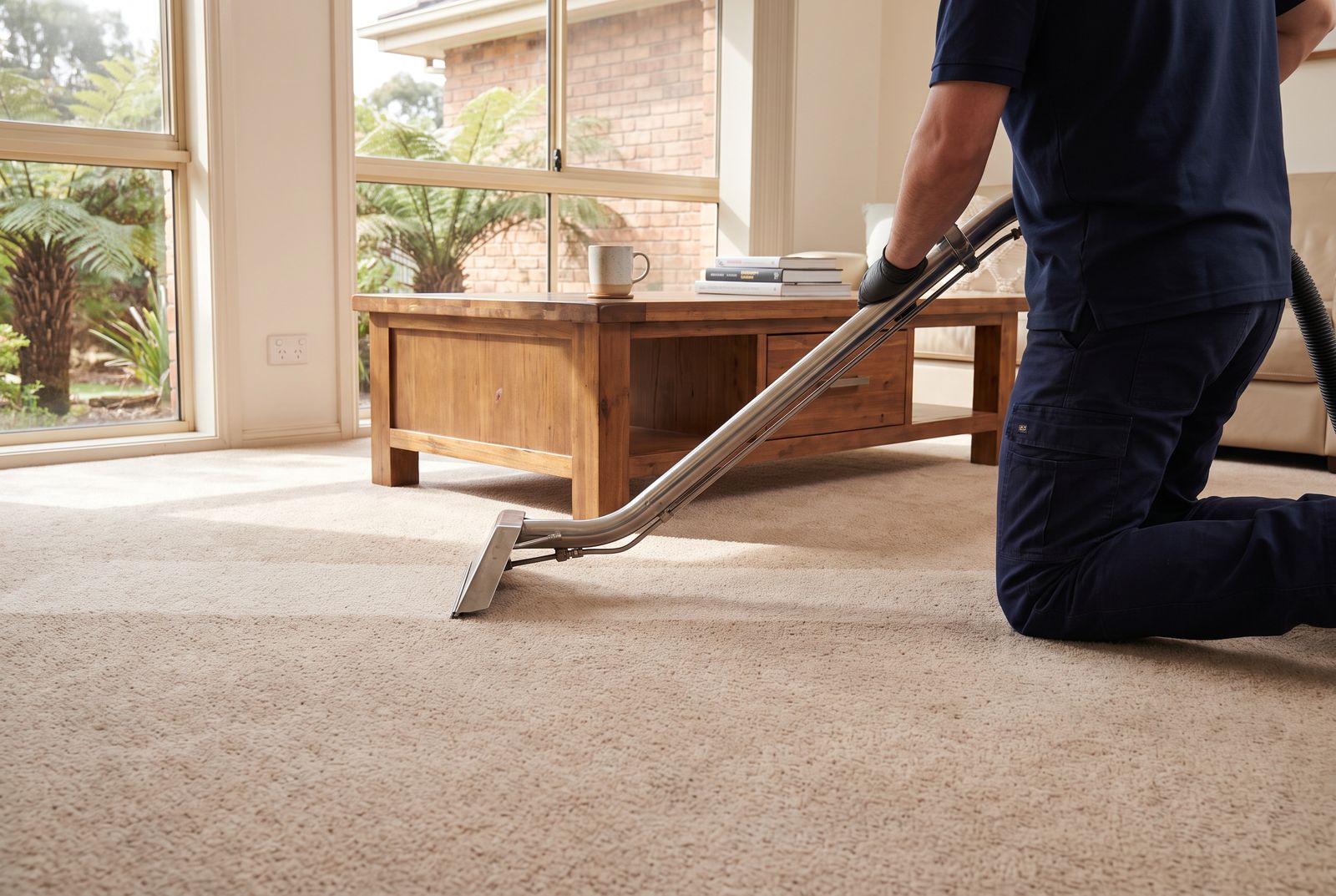
A carpet cleaner typically uses steam cleaning or hot water extraction and grooms the pile to reset it. That may improve compressed pile, but there is no guarantee on deep dents. Damaged pile or underlay is a repair, not a clean, and a patch or plug repair typically costs $150 to $350. Home Ready Cleaning passes your job to one local cleaning business, and a local cleaner gets back to you within the hour.
Full details: Carpet cleaning
How to get furniture marks out of carpet: your questions answered
Should I move furniture before a carpet cleaner arrives?
Clear small items and light furniture. Many cleaners will not move beds, wardrobes, pianos or electronics, and some charge to move furniture, so move what you want cleaned under, or ask first. Once the carpet is clean, keep heavy furniture off it until it is dry.More on carpet cleaning
More stain and smell guides
- Carpet deodorising
- How to get blood out of carpet
- How to spot clean carpet
- Remove dog urine smell
- How to get vomit off carpet
- How to get pee odour out of carpet
- How to get dog poop off carpet
- How to get paint out of carpet
- Remove red wine from carpet
- How to get oil off carpet
- How to remove cat pee smell from carpet
- Remove coffee stains from carpet
- Remove pet stains
- How to get milk out of carpet
- How to get makeup off carpet
- How to get a tea stain out of carpet
- How to get rust stains out of carpet
- Remove glue from carpet
- How to remove wet carpet smell
- Remove ink from carpet
- How to get dog urine out of furniture
- How to get mud off carpet
- How to remove dog pee smell from the floor
- How to remove new carpet smell
Carpet cleaning in the most searched places
About Home Ready Cleaning
Official sources
Checked on 13 November 2026.
- NSW Fair Trading, Fair wear and tear versus damage in rental properties