

Biohazard cleaning
Need a biohazard cleaner? Hear back within the hour.
Careful cleaning of sewage, squalor, used needles and drug residue. Tell us what you found and one verified local specialist gets in touch.
- Licence checked and insured
- Verified by Home Ready Cleaning
- Matched with a biohazard cleaning specialist
From 500+ reviews
Checked before they get your job
- Back within the hourA local biohazard cleaner gets back to you within the hour.
- Licence checkedWe check each business's licence before it gets jobs.
- InsuredEvery business we pass jobs to is insured.
- Verified by Home Ready CleaningLook for the badge. Only verified businesses get your job.
What biohazard cleaning typically covers
Biohazard cleaning is the removal and cleaning of biological and hazardous waste in a home. Every business works its own way, so confirm the plan when they see the property.
Sewage and wastewater
- Sewage removed and every surface it touched cleaned
- Hard surfaces disinfected after cleaning
- Soaked carpet, mattresses and soft items removed
- Contaminated plasterboard and insulation removed
- Rooms dried with fans and dehumidifiers
Hoarding and squalor
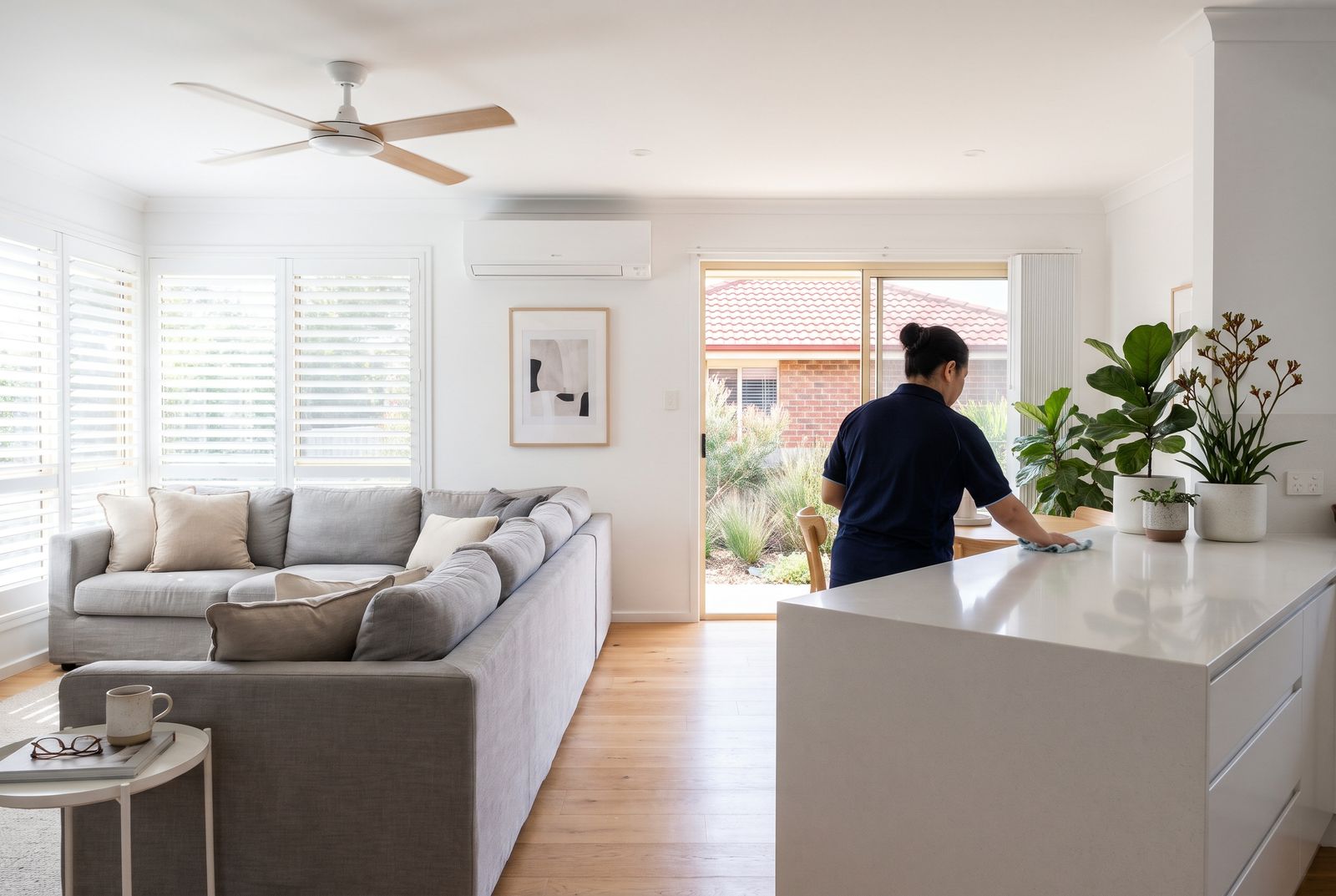
- Rubbish and spoiled food cleared
- Animal and human waste cleaned up
- Belongings sorted in stages, with you
- A deep clean and odour treatment once cleared
- Family or a support worker involved if you wish
Needles and drug residue
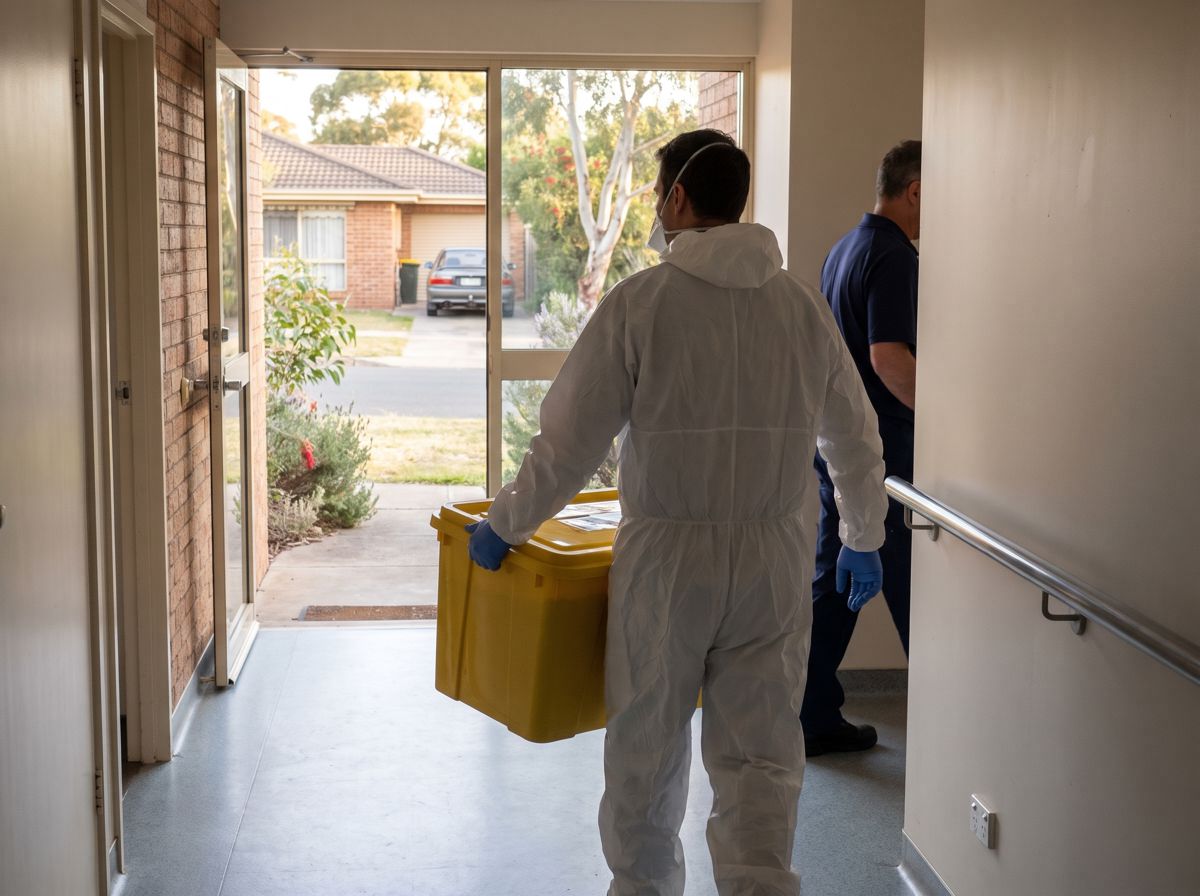
- A careful sweep for used needles and syringes
- Needles collected and taken away for disposal
- Testing for drug residue arranged
- Affected surfaces cleaned and decontaminated
- A retest after cleaning to check the result
Finishing and records
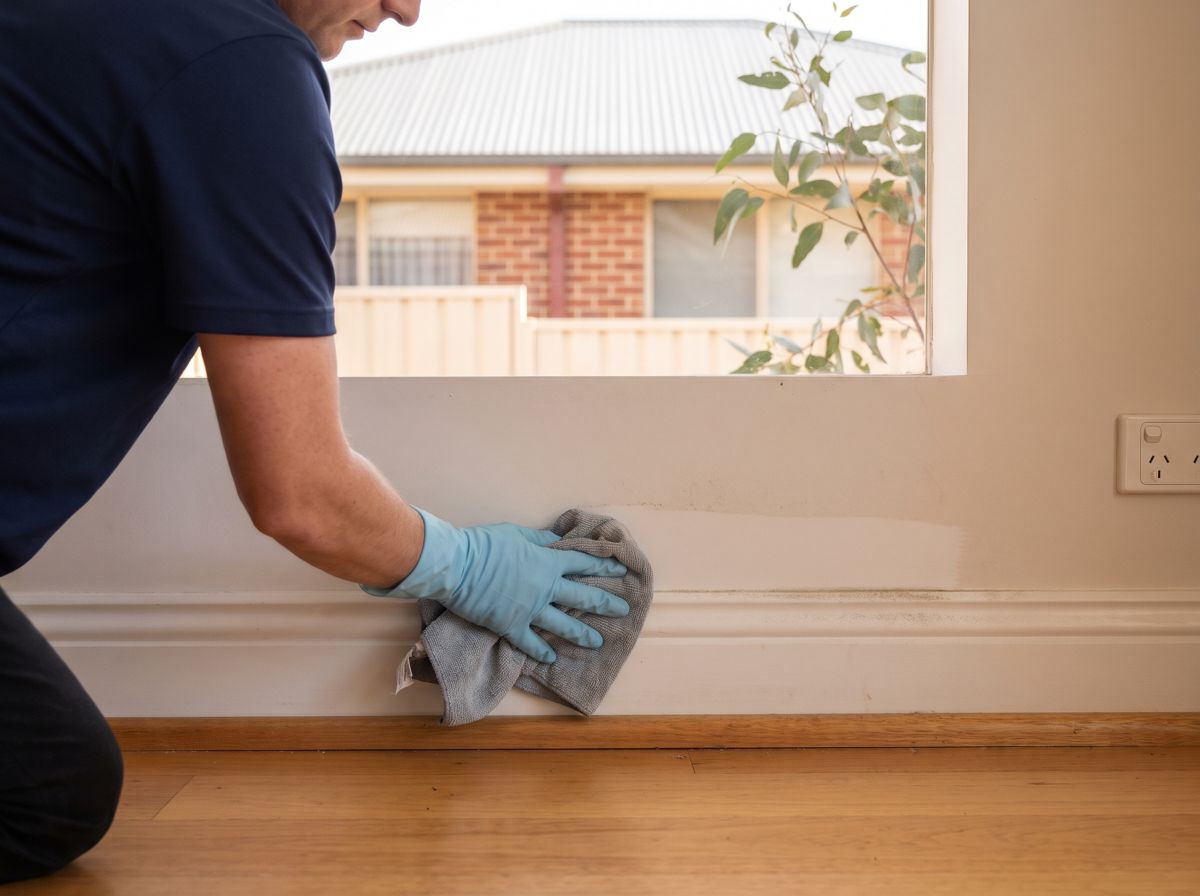
- Odour treated at its source, not covered up
- Air filtered with HEPA machines where needed
- Items checked to clean, keep or dispose of
- A summary of the work and any test results
- A final check before the area is handed back
Sometimes included
On some lists and not others. Ask when they look at the property.
- Mould treatment after a sewage leak
- Regular needle sweeps for a property
- Clearance testing by an outside tester
- Help with an insurance claim
Often priced separately
Businesses rarely publish prices for these, so each is priced when they see the property.
- Rubbish removal for a hoarding clean-upPriced at the visit
- Drug residue testing before and afterPriced at the visit
- Extra visits for strong odourPriced at the visit
- Cleaning a vehiclePriced at the visit
Not part of a biohazard clean
These are separate jobs with their own trades or specialists.
- Plumbing repairs to stop a leak or overflow
- Making power safe after water reaches it
- Septic tank pump-outs
- Larger repairs and rebuilding
- Cleaning after a death, accident or crime
What kind of biohazard clean is it?
Biohazard cleaning usually covers one of three kinds of job. Share what you found, and the cleaner works out the rest when they see the property.
Sewage and wastewater
Sewage can come inside from blocked or damaged plumbing, a sewerage backflow, a damaged septic tank or flood water. Health advice is to keep children and pets away until the area has been disinfected.
Hoarding and squalor
A home where clutter, spoiled food or animal or human waste has built up. The work is usually done in stages, with you, family or a support worker involved in what is kept.
Needles and drug residue
A careful sweep for used needles and syringes, or testing and cleaning where drugs have been used or made. Drug residue work is tested before and after cleaning to check the result.
What is different about biohazard cleaning, and when it is worth it
Biohazard cleaning is a different job from a deep clean. These points help you tell when you need it and which kind to ask for.
How it differs from a deep clean
A deep clean is a top-to-bottom clean of a lived-in home, usually a set price by bedrooms and bathrooms, and it leaves out biohazard work. A biohazard clean deals with the waste itself. Each kind of waste needs different equipment and methods, so a site visit sets the price. Before it starts, the Better Health Channel says to avoid direct contact with sewage and anything it has touched.
When it is worth booking
It is usually worth booking when sewage has come inside, when needles keep turning up on a property, when drugs have been used or made in the home, or when clutter, spoiled food or animal or human waste has built up. The Better Health Channel sets out how to clean up sewage safely yourself, so check its advice first. If the job is too big, or you would rather not, a biohazard cleaner can do it.
What it usually does not fix
A biohazard clean deals with the waste, not what caused it. Plumbing repairs to stop a leak or overflow, and making power safe after water reaches it, are separate jobs for their own trades. If things are not completely dried, the Better Health Channel says mould or mildew may develop. Where a home is affected by hoarding or squalor, Fire and Rescue NSW says these are complex issues that often need long-term, coordinated support from appropriate services.
How to choose between the types
Choose by what you found. Sewage work cleans and disinfects every surface the sewage touched. A home affected by hoarding or squalor is usually cleared in stages, and rubbish removal is often priced separately. Needles call for a careful sweep, and regular sweeps are on some cleaners' lists. Drug residue work is usually tested before and after. If you found more than one of these, tell the cleaner what and where, so the team can plan for all of it.
Estimated biohazard cleaning prices
Every job is different, so the price is set when a cleaner sees the property, or sometimes from photos. These are wide estimates of what to expect. Every business sets its own price.
| The job | Usual time | Estimated price |
|---|---|---|
| Small spill, surface only | A few hours | $1,000 to $3,000 |
| Hoarding or squalor clean-up | A day or more | $1,000 to $20,000 |
| Drug residue, whole home | Set at the site visit | $10,000 to $30,000 |
| Full range across all biohazard jobs | A few hours to several visits | $1,000 to $30,000 |
Estimates only. Sewage clean-ups and needle sweeps are priced at the visit. A site visit sets the real price, and some jobs cost more than the top of these ranges. Estimates checked on 12 November 2026.
What moves the price
- What the waste is
- Sewage, animal or human waste, used needles and drug residue each need different equipment and methods, so the kind of waste shapes the price.
- How much there is
- A small spill on a hard floor is a much smaller job than waste spread through several rooms or under heavy clutter.
- What cannot be saved
- Government health advice is to throw out soaked items that cannot be properly cleaned, such as carpet, mattresses and upholstered furniture. Removing them adds time and disposal costs.
- Waste disposal
- Biohazard waste is priced by its type and amount, and a hoarding clean-up can also need rubbish removal.
- Testing
- Drug residue work needs testing before and after cleaning, which adds to the price.
- Access and urgency
- Clutter that blocks rooms, urgent or after-hours work and a travel fee for homes further out can all add to the price.
When you may not need biohazard cleaning
Six cases where biohazard cleaning is not needed, or another job fits better.
The home needs a thorough clean, but there is no waste
Book a deep clean instead. It is a top-to-bottom reset for a home that has fallen behind. A home that has gone a long time without a thorough clean takes longer, and some businesses charge extra for heavy build-up on the first visit.
Deep cleaningIt is mostly belongings, not waste
Book hoarder cleaning instead. Where there are large amounts of belongings but the home is still fairly clean, the work is mostly sorting and clearing with the person who lives there.
One pet accident on carpet or a couch
A carpet or couch cleaner usually treats a fresh accident with an enzyme product. On carpet, pet urine treatment is a popular add-on, priced by the room. Biohazard cleaning is for animal or human waste that has built up.
Carpet cleaningMould, with no sewage behind it
Book mould removal instead. The Better Health Channel says the best way to control mould is to control moisture, and if the source of moisture is not removed or controlled, the mould is likely to come back.
The septic tank needs pumping out
A septic tank pump-out is not part of a biohazard clean. The Better Health Channel says it is a job for a licensed contractor, and to contact a plumber if you think the plumbing or septic tank is damaged.
Someone has died, or there was an accident or crime
Book trauma cleaning instead. Cleaning after a death, an accident or a crime is a separate service. Biohazard cleaning covers sewage, rubbish and waste in a home affected by hoarding, used needles and drug residue.
Mould, carpet and end of lease cleaning after a biohazard clean
How these jobs fit around a biohazard clean, and which part belongs to which job.
Mould removal
Mould treatment after a sewage leak is on some biohazard cleaners' lists and not others, so ask when they look at the property. Mould across several rooms, or in plasterboard, timber or carpet, usually needs full mould remediation. Flood and water damage drying is not part of mould removal, and drying the rooms is typically part of a sewage clean-up.
Carpet cleaning
Carpet soaked by sewage is usually taken out as part of the biohazard clean. The Better Health Channel says to throw out soaked items that cannot be properly cleaned. A standard carpet clean leaves out flood or water damage drying, which is a separate job. Ask the biohazard cleaner which carpet can stay before you book a carpet clean.
Carpet cleaningEnd of lease cleaning
An end of lease clean is for an empty home, done to the standard of the condition report. Rubbish removal, items left behind and mould that needs specialist removal are not part of it, so ask the biohazard cleaner what needs to be done before you book it. Ask them too for a summary of the work and any test results, which can help with the property manager.
End of lease cleaningWhat to expect on the day
How a biohazard clean usually runs, so you know what is happening while the work is done.
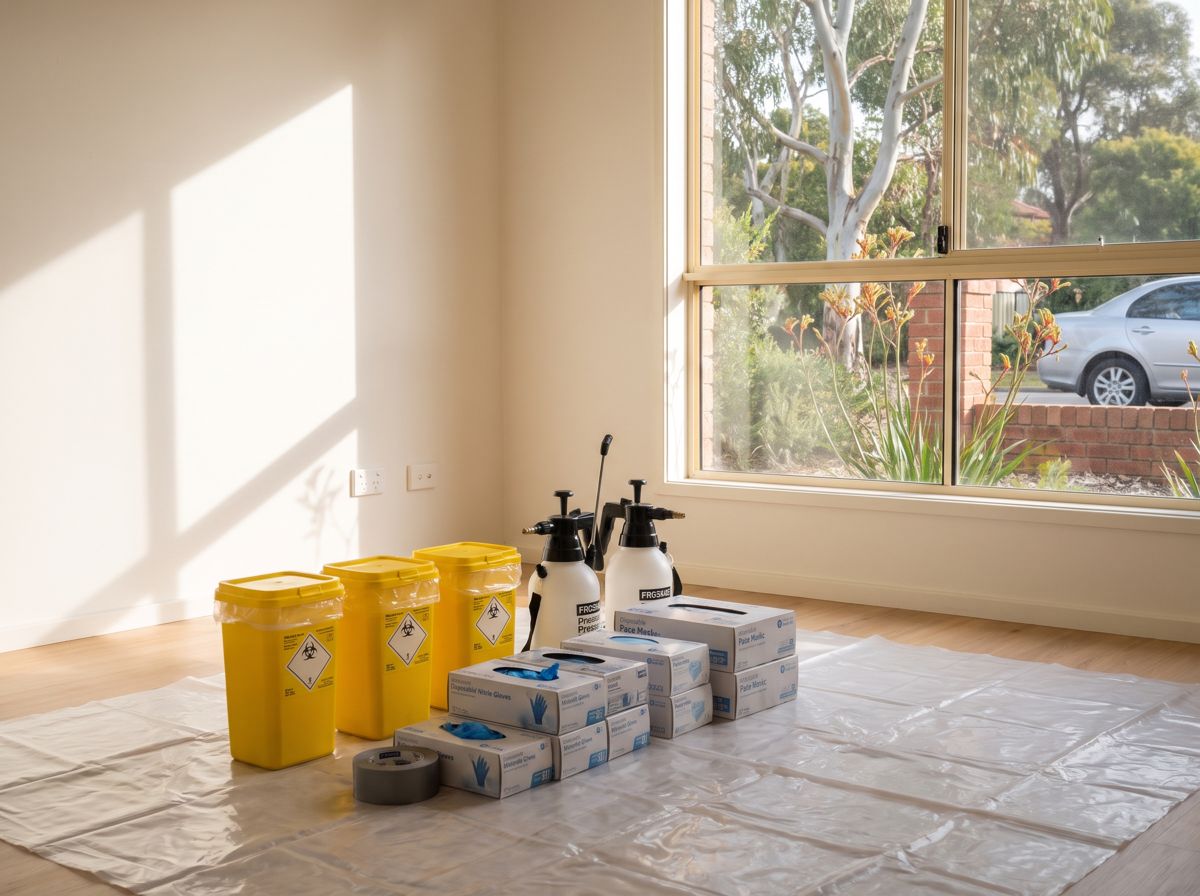
A look first
The cleaner looks at the property, or sometimes photos, and works out what can be cleaned and what must go.
Work area closed off
The team often closes off the work area with plastic sheeting.
Staying in the home
It depends on what is there. Often the work area is closed off so you can use the rest of the home, and sometimes the cleaner suggests staying elsewhere.
Waste leaves sealed
Contaminated waste and items that cannot be saved are sealed in containers on site and taken away, so you do not have to handle them.
Hoarding in stages
A hoarding clean-up is usually done in stages, with you, family or a support worker involved in deciding what is kept.
Paperwork
Many businesses give you a summary of the work, a list of removed items and any test results, which helps with an insurance claim or a property manager.
Six things that can help before the cleaner arrives
Only do what is safe. These steps protect you and help the cleaner plan.
- Keep your distanceGovernment health advice is to avoid direct contact with sewage and anything it has touched. Do not touch any needles you find.
- Keep children and pets awayKeep children and pets away from contaminated areas and objects until they have been disinfected.
- Make power safeDeal with any electrical hazards before cleaning starts. Call a licensed electrician, or switch off the power at the switchboard.
- Call a plumberContact a plumber if you think the plumbing or septic tank is damaged. If sewage is leaking outside your property boundary, contact your local water business or council.
- Wash your handsWash your hands often with soap and water, especially after touching anything contaminated and before preparing food. See a doctor if you become unwell.
- Note what you foundTell the cleaner what you found and where, such as needles, waste or affected rooms. Send photos only if it is safe to take them.
What to ask a biohazard cleaner before you book
Each business works its own way, so these questions help you compare prices and plan the clean.
- Do you need to see the property to give a price?Usually, as every job is different, though some cleaners can price from photos.
- Is getting rid of the waste in the price?Biohazard waste is priced by its type and amount, and rubbish removal for a hoarding clean-up is often priced separately, so ask what the price covers before you compare.
- Is testing before and after in the price, and who does it?Drug residue testing is often priced separately, at the visit. Some cleaners arrange clearance testing by an outside tester.
- Do you charge more for urgent or after-hours work, or add a travel fee?Some do. Clutter that blocks rooms can also add to the price, so mention it when you call.
- Do you offer regular needle sweeps?Regular sweeps of a property are on some cleaners' lists and not others, so ask about them if needles keep turning up.
- How will you dry the rooms, and is the equipment in the price?In a sewage clean-up, rooms are usually dried with fans and dehumidifiers. Some businesses charge for equipment hire on top of labour.
Biohazard cleaning: your questions answered
Plain answers to the questions people ask most.
How much does biohazard cleaning cost?
As a wide estimate, a small spill on a surface runs $1,000 to $3,000, a hoarding or squalor clean-up $1,000 to $20,000, and cleaning drug residue from a whole home $10,000 to $30,000. Sewage clean-ups and needle sweeps are priced at the visit. Every job is different, so a site visit, or sometimes photos, sets the price.What counts as biohazard cleaning?
It is the removal and cleaning of biological and hazardous waste in a home, such as sewage, rubbish and waste in a hoarded home, used needles and drug residue. Cleaning after a death, an accident or a crime is trauma cleaning, which is a separate service.Is sewage inside the house a health risk?
Yes. Sewage can carry viruses, bacteria and parasites, and contact without the right protection can pass on infections such as norovirus or hepatitis A. Keep children and pets away and do not touch it until the area has been disinfected.Can I clean up a sewage overflow myself?
Government health advice sets out how to do it safely: deal with electrical hazards first, wear rubber gloves, boots and eye protection, disinfect every surface the sewage touched, and throw out what cannot be cleaned, such as soaked carpet, mattresses and soft toys. If it is too big or you would rather not, a biohazard cleaner can do it.What should I do if I find a needle?
The rules differ by state and territory.In NSW, health advice is that if you find a sharp in a public place that does not belong to you, do not touch it, and call the NSW Needle Clean Up Hotline to organise its safe removal.
In Victoria, council advice is not to touch the sharp point or break the needle, and that if you find a syringe on private property, you can call the Victorian Syringe Disposal Helpline.
In Queensland, health advice is that if you find a discarded needle you should contact your local council about getting it removed. If you need to dispose of it yourself, use a hard plastic container with a sealable lid to pick it up and store it, and wash your hands after. The Needle and Syringe Helpline can help you find your nearest disposal point.
In South Australia, SA Health advice is not to handle a syringe you find, or try to break off, bend or cover its sharp end. If you don't feel confident to dispose of it safely, call the Needle Clean Up Hotline.
In Western Australia, health advice is not to touch the sharp point. Pick up a discarded needle and syringe by the blunt end, put it point first into a rigid-walled, puncture resistant plastic container with a well-secured lid, seal it and put it in a domestic rubbish bin. For questions, contact your local government environmental health officer.
In Tasmania, City of Clarence advice is to report a needle found on public land to the council, or for urgent issues outside business hours, to Tasmania Police. On private property, the property owner is responsible for arranging its safe disposal, and needles should only be handled by trained people using approved sharps containers. Never put them in household, recycling or public bins.
In the ACT, if you find a needle or syringe in a public place, do not touch it or move it with any object. Note and mark the location and call the 24-hour Sharps Hotline. Sharps on leased land, including homes, are the leaseholder's to dispose of, and if you find them on private land you will be advised of the appropriate disposal procedures.
In the Northern Territory, the Needle and Syringe Program provides safe sharps disposal. Its 3 primary outlets, in Darwin, Palmerston and Alice Springs, offer 24-hour disposal of equipment. Secondary outlets, including those run by hospital emergency departments, offer limited disposal facilities, and some pharmacy outlets also have disposal facilities.
If a needle pricks you, health advice is to wash the wound with soap and water for at least 30 seconds, then go straight to your doctor or the nearest hospital emergency department. A biohazard cleaner can sweep a property where needles keep turning up.
Who is responsible for a sewage leak?
Government health advice is to contact your local water business or council if sewage is leaking outside your property boundary. Depending on where the leak is, fixing it could be the water business's job or the householder's. A registered plumber can advise whether your own sewage system is working properly.Is there help for hoarding and squalor?
For older people, the Commonwealth Home Support Program can provide hoarding and squalor support, such as care planning and one-off clean-ups, through My Aged Care. An aged care assessor decides who is eligible. Some biohazard cleaners also work alongside family, a caseworker or a mental health professional.How long does it take?
A small spill can often be cleaned in a few hours. A hoarding or squalor clean-up usually takes a day or more and is often done in stages. Drug residue work includes testing before and after, so the time is set at the site visit. Strong odour can need more than one visit.Do I have to leave the home?
It depends on what is there, and the cleaner usually advises after looking. Often the work area is closed off so you can use the rest of the home, and sometimes they suggest staying elsewhere until the work is done.What happens to the waste?
Items are checked first to decide what can be cleaned and kept. Contaminated waste and items that cannot be saved are sealed in containers on site and taken away by the cleaner. Ask for a list of what was removed if your insurer or property manager needs it.Are biohazard cleaners trained and insured?
Every business we pass jobs to is insured, and we check its licence before it gets jobs. Ask what biohazard training the team holds and, for drug residue work, how they will test the result.Should I call my insurer before the clean-up?
If flood water brought the sewage in, the Better Health Channel says to seek expert advice from your insurance company before cleaning or throwing out water-damaged items. Help with an insurance claim is on some biohazard cleaners' lists, so ask when they look at the property.How do I know the clean has worked?
Many cleaners do a final check before the area is handed back, and drug residue work is usually retested after cleaning. A summary of the work and any test results is typically part of the finish, so ask for it in writing if a property manager or insurer needs it.Will the smell go?
Many cleaners treat odour at its source rather than covering it up, and some filter the air with HEPA machines. Strong odour can need more than one visit, and extra visits are often priced separately, when the cleaner sees the property. Ask how many visits they expect.Will walls or insulation have to come out?
If sewage has reached them, they may. The Better Health Channel says to discard contaminated plasterboard and insulation, and removing them is typically part of a sewage clean-up. Ask before work starts what will come out and who will replace it.Biohazard cleaning by city and town
Pick your city or town to send the job to a local biohazard cleaner there.
Victoria
Deep cleaning in the most searched places
More on deep cleaning
Official sources
Checked on 12 November 2026.
- NSW Health, Community sharps management
- Sydney Water, Avoid wastewater overflows
- Sydney Water, Wastewater blockages
- City of Monash, Syringe disposal
- Better Health Channel, Sewage overflows at home
- Cairns and Hinterland Hospital and Health Service, What to do if you find a used needle
- Workplace Health and Safety Queensland, Infection risks from work with sewage
- SA Health, Syringes - what to do if you find a used one
- SA Health, Wastewater incidents in and around the home
- SA Health, Removing wastewater indoors
- SA Water, Sewer problems and drain blockages
- HealthyWA, Safe disposal of needles and syringes for people who inject drugs
- HealthyWA, Domestic wastewater overflow - cleaning up
- HealthyWA, Household wastewater and health risks
- Water Corporation, Sewer blockage or overflow
- City of Clarence, Waste FAQ's
- ACT Government City Services, Sharps
- Icon Water, Blocked pipes
- Northern Territory Government, Needle and syringe program
- Northern Territory Government, Check your septic tank after a flood or cyclone
- Power and Water Corporation, Sewer blockages and overflows
- My Aged Care, Hoarding and squalor assistance
- Healthdirect, Needlestick injuries
- Safe Work Australia, Model Code of Practice: Managing the risks of biological hazards at work
- Fire and Rescue NSW, Hoarding and squalor fire safety
- Better Health Channel, Mould removal at home
- Better Health Channel, Mould and your health
Ready when you are.
Tell us the job once. One verified local biohazard cleaner gets back to you within the hour.
Get help with the clean-up →