


How-to guide
Concrete cleaning
Clean a concrete driveway, path, patio or garage floor yourself, step by step. What matters most is to start with the mildest cleaner and the lowest pressure that does the job.
The short answer
Sweep off leaves and dirt. Pre-treat oil, rust or mould with a cleaner made for the stain, tested on a hidden patch. Scrub with warm water, detergent and a stiff brush before trying anything stronger. If you pressure wash, start low and turn it up only as needed. Rinse, keep the run-off out of the street drain, and let it dry.
What you need
- Sturdy broom or leaf blower
- Stiff and soft brushes
- Detergent and warm water
- Concrete cleaner or degreaser
- Goggles and gloves
- Pressure washer or hose
How to clean concrete, step by step
For outdoor concrete such as driveways and paths.
- Pick a dry, still dayClean on a dry day, not in rain, so the concrete can dry properly afterwards. Avoid windy days too, when spray drift can carry cleaning products into the stormwater drain.
- Sweep off leaves and loose dirtSweep or blow away leaves, dirt and debris before any water goes on. Put the sweepings in the bin or on the garden, and do not hose them into the gutter.
- Pre-treat oil, rust and mould firstUse a cleaner suited to each stain and test it on a small hidden patch. Dilute it as the label says and give it time to work, often about 10 to 30 minutes. Keep bleach and chemicals off garden beds and lawns, as they can kill plants.
- Scrub with warm water and detergentScrub with warm water, laundry detergent or dishwashing liquid, and a stiff nylon brush. Use a gentle cleaner and a soft brush on coloured, stamped, painted or sealed concrete. Move to a stronger cleaner only if this fails.
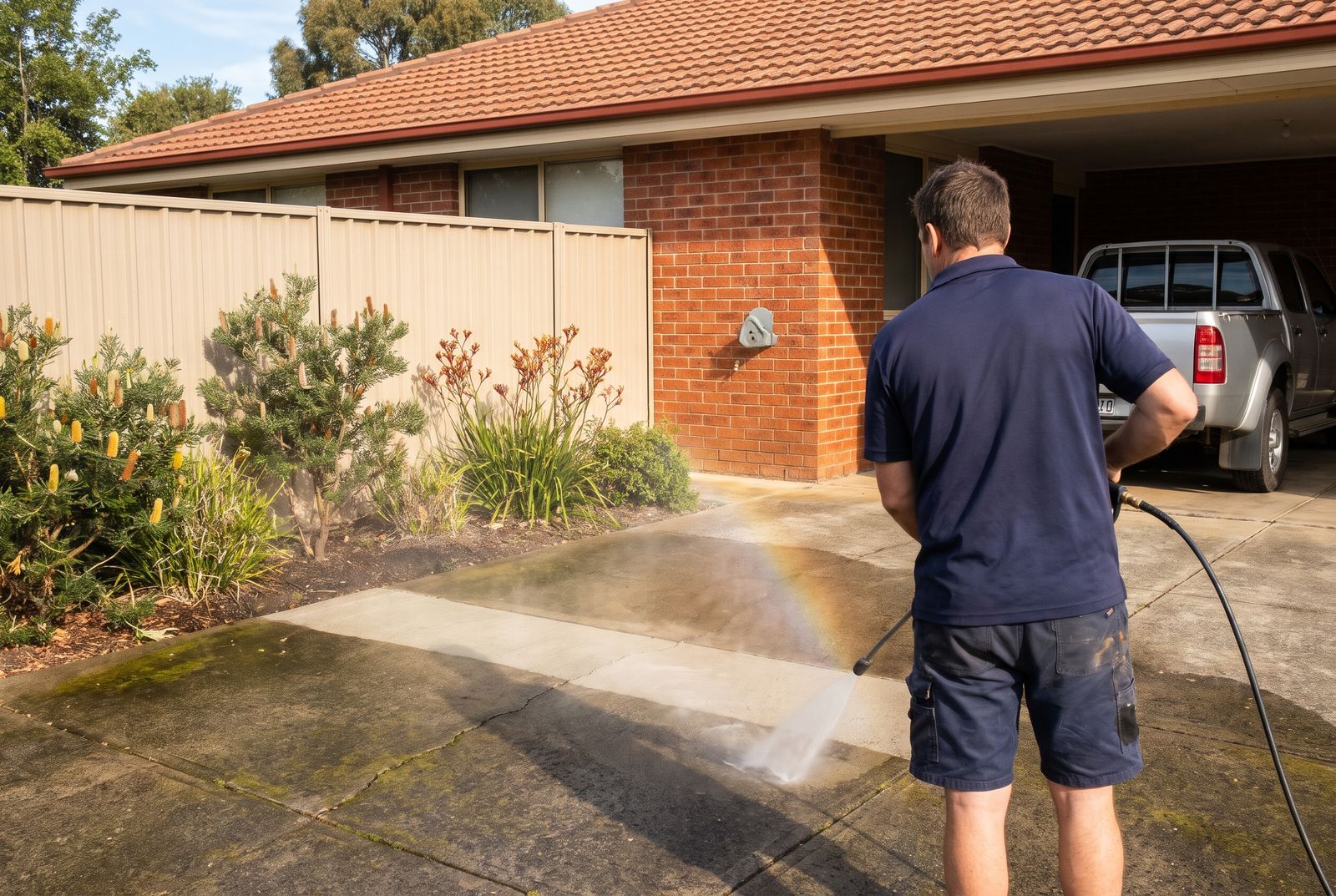
- Pressure wash, starting on a low settingThis step is optional. Fit a patio cleaning nozzle or fan tip, start on a low setting and turn it up only as needed, as too much pressure can etch concrete.
- Rinse off all the cleanerRinse the whole surface with fresh water so no cleaning product is left behind to cause streaks or residue. Keep the run-off out of the gutter and the street drain.
- Let it dry, then seal if you chooseLet the concrete dry completely. Sealing is optional: it slows stains and regrowth, but a sealed surface can be slippery when wet. Deal with any cracks first rather than sealing over them, and seal only once it is clean and fully dry, usually after 24 to 72 hours.
What you need to clean concrete
Get these together before you start.
Sturdy broom or leaf blower
A sturdy broom, brush or leaf blower to clear leaves, dirt and other debris before any water or cleaner goes on.
Stiff and soft brushes
A stiff nylon brush for scrubbing plain concrete, and a soft brush for coloured, stamped, painted or sealed concrete, which needs gentler cleaning.
Detergent and warm water
Powdered laundry detergent or dishwashing liquid in warm water, or a pH-neutral cleaner. It is the mildest option, so try it first.
Concrete cleaner or degreaser
An outdoor or concrete cleaner for mould, rust and stubborn stains, and a degreaser for oil. Dilute each exactly as its label says.
Goggles and gloves
Safety goggles or a face shield, and safety gloves, for any cleaning chemical. Prescription glasses and sunglasses can let liquid splash behind the frames.
Pressure washer or hose
A pressure washer with a patio cleaning nozzle or fan tip is optional. Without one, scrub well and rinse with a garden hose.
Staying safe with cleaning chemicals and high pressure water
Each point as an Australian government body puts it.
Protect your eyes from splashes
The Better Health Channel says to always wear safety goggles or a face shield when handling liquid chemicals, as prescription glasses and sunglasses do not protect reliably. If acid or alkali splashes your eyes, hold your face under running water for 15 to 20 minutes and seek urgent medical attention.
Gloves and burns to the skin
Household bleach is one of the chemicals healthdirect says can cause chemical burns. It advises following the product instructions and wearing safety gloves and eye protection. If a chemical gets on your skin, wash it off straight away under cool running water for at least 20 minutes.
Do not mix bleach with acids
On its page about removing mould at home, the Better Health Channel says not to mix bleach with ammonia, acids or other cleaners, as this can release hazardous chlorine or chloramine fumes. Bleach and acid cleaners are both used on concrete.
No high pressure water on asbestos
The Asbestos and Silica Safety and Eradication Agency says it is illegal in every state of Australia to use high pressure water spray or compressed air on asbestos materials. Older homes can have asbestos cement in walls, eaves and fences next to paths and patios.
Oil, rust and mould stains on concrete
What changes from the basic method.
| Stain | What to use | Watch for |
|---|---|---|
| Fresh oil spill | Soak it up with kitty litter or another oil absorbent and bin it. Then scrub the mark with dishwashing liquid or a degreaser and hot water. | Soak up the spill before any water goes on. |
| Old, soaked-in oil | A concrete degreaser left to work, then hot water and a stiff brush. | It often fades rather than disappears, even after a second treatment. |
| Rust | A rust remover or a specialist concrete cleaner, tested on a hidden patch. | Cleaning will not fix rust bleeding up from steel inside the concrete. |
| Mould, moss and algae | A bleach-based outdoor cleaner on plain, unsealed concrete, diluted as the label says and rinsed well. | Bleach can kill plants and strip colour from coloured, stamped or sealed concrete. |
Checked on 12 November 2026.
Wash water and water rules: check before you start
This applies whenever you hose or pressure clean concrete.
- Keep wash water, oil and detergent out of the drain and gutter. Send it to a soakage area such as the garden or lawn.
- Water rules for cleaning hard surfaces differ by state, and in several by area, water supplier or town. Check yours before you start.
- Some rules apply every day. In Victoria, drinking water can only be used on driveways and paths in set cases, such as removing staining once a season.
- In South Australia, wash water from a high-pressure clean must not go into the stormwater, and a breach can bring a $300 fine.
Where the guides disagree
The wrong choice on these can damage concrete. Here is each side.
How much pressure to use
One guide says a medium setting is safe for most concrete. Another works up from a soft setting to high pressure on concrete. A third starts low and increases only as needed. Too much pressure can etch concrete and loosen aggregate.
White vinegar
Two guides suggest white vinegar as a mild first try on light stains. One of them warns that on sealed or polished concrete it can etch the surface or dull the sealer over time. A paving guide says not to use vinegar on concrete pavements.
Hydrochloric acid
One guide keeps diluted hydrochloric acid as a last resort for deep stains, rinsed off thoroughly, but warns it removes the surface layer of the concrete and can leave it splotchy. A guide on concrete paving blocks says acid can damage them.
When to call a professional
A professional is often the better call in these cases.
- The area is large or heavily soiledA big slab can take a full weekend by hand, and a pressure washer on a large slab is slow, tedious work. Large or heavily soiled areas are often worth a professional.
- Old stains have soaked inIf household methods have not shifted an old oil or rust stain, a professional's degreaser and hot water, left to work, may lift more. Old oil may still only fade.
- You are unsure of the pressure or productIf you are unsure, hire an expert. Too much pressure or acid used wrongly can damage the surface, and the damage may end up costing more to fix.
A professional typically treats stains first, uses a round spinning surface cleaner for an even finish, and puts a degreaser and hot water on oil. Flat areas are often priced at about $2 to $8 a square metre, and most cleaners have a minimum charge of about $100 to $275. Home Ready Cleaning passes your job to one local cleaning business, and each business is insured.
Full details: Pressure cleaning
More on pressure cleaning
More how-to guides
Pressure cleaning
Pressure cleaning in the most searched places
About Home Ready Cleaning
Official sources
Checked on 13 November 2026.
- Better Health Channel, Eye injuries - chemical burns
- healthdirect, Chemical burns - first aid and treatment
- EPA South Australia, Around the home
- Better Health Channel, Mould removal at home
- Asbestos and Silica Safety and Eradication Agency, The dangers of asbestos cement roofs
- NSW Government, Water restrictions
- Seqwater, Water saving advice
- TasWater, Water restriction guidelines
- Power and Water Corporation, Katherine compulsory water conservation measures
- Victorian Government, Permanent water saving rules