

How-to guide
Paver cleaning
Clean pavers yourself with a broom, hot soapy water, a brush and a hose. Start with the mildest method, and test anything stronger on a hidden patch first.
The short answer
Sweep the pavers and pull weeds from the joints. Test any cleaner on a hidden patch, then scrub with hot soapy water. Treat moss and mould with a bleach-based outdoor cleaner, wearing gloves and eye protection, and hose it off. Pressure wash on a low setting only if grime remains, then refill lost joint sand.
What you need
- Broom and garden hose
- Scrubbing brush
- Dishwashing liquid or neutral soap
- Bleach-based outdoor cleaner
- Gloves and eye protection
- Joint sand
How to clean pavers, step by step
For a paved path, patio or driveway.
- Clear the area and sweep itMove furniture, the barbecue and decorative items off the pavers. Sweep or blow away leaves, dirt and loose debris with a sturdy broom, brush or blower before you start washing.
- Clear weeds and moss from the jointsPull weeds and moss out of the joints carefully, so the sand stays put: big roots can take the joint sand with them. Boiling water poured over weeds and moss helps keep them at bay.
- Test your cleaner on a hidden patchTry every cleaner on a small out-of-sight patch first, and check the result before you do the whole area. Bleach can discolour some pavers, and acid can etch or damage limestone and natural stone.
- Scrub with hot soapy water firstMix dishwashing liquid or a neutral soap into hot water, spread it on a section and leave it a few minutes. Scrub with a stiff-bristled brush, or a soft one on soft stone. Go stronger only if the dirt stays.
- Treat moss and mould with outdoor cleanerPut on safety gloves and eye protection, as healthdirect advises for any chemical. Apply a bleach-based outdoor cleaner as its label says, never mixed with acid or other cleaners, and watch plants and lawn on the lower side of the area.
- Rinse it all off with a hoseHose the pavers down thoroughly with clean water until no cleaner is left. Flushing it away with plenty of fresh water helps avoid damaging nearby garden plants and the lawn.
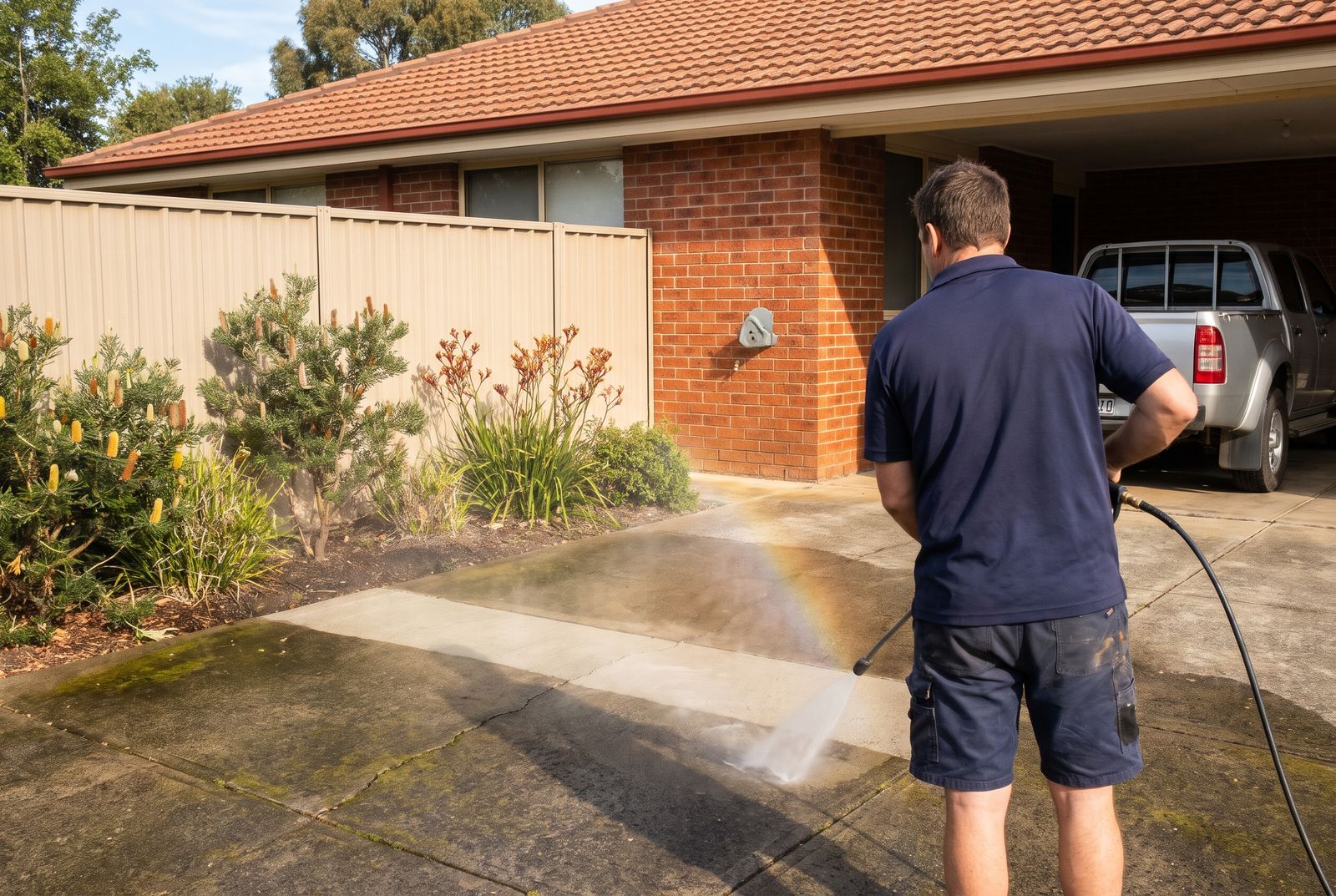
- Pressure wash on a low setting if neededFor grime the brush leaves, start the pressure washer on a low setting and work up only as needed. Use a surface cleaner attachment, and take care not to blast the sand out of the joints.
- Top up the joint sandSome joint sand can wash out, even with care. Sweep dried joint sand, or polymeric sand that hardens with water, into the gaps until full. Once the pavers are dry, a sealer can slow stains and regrowth.
What you need to clean pavers
Have these ready before you start.
Broom and garden hose
A sturdy broom or garden blower to clear loose debris, and a garden hose to rinse off each cleaner with plenty of clean water.
Scrubbing brush
A stiff-bristled brush suits most pavers. Use a soft brush on soft or porous natural stone, such as bluestone, and scrub gently.
Dishwashing liquid or neutral soap
Mixed into hot water, dishwashing liquid or a neutral soap is the mildest cleaner and the one to try first.
Bleach-based outdoor cleaner
For moss, mould and algae: one made for outdoor paving, mixed as its label says. Bleach can discolour pavers, so test it first.
Gloves and eye protection
Safety gloves, and goggles or a face shield, for any chemical. The Better Health Channel says prescription glasses and sunglasses do not give reliable protection.
Joint sand
Dried joint sand or a polymeric sand, which hardens with water, to refill joints that lose sand in the wash.
Staying safe with paver cleaning chemicals
Each point as a government body states it. None of these pages is about pavers.
Chemicals can burn skin and eyes
healthdirect says household bleach and pool chlorinators can cause chemical burns, most of which come from strong acids or strong bases. It says to always wear safety gloves and eye protection when using chemicals, and to read and follow the instructions.
Never mix bleach with acid
On its page about mould removal at home, the Better Health Channel says not to mix bleach with ammonia, acids or other cleaners, as this can release hazardous chlorine or chloramine fumes.
If a chemical splashes you
healthdirect says to wash a chemical off your skin straight away under cool running water for at least 20 minutes. For acid or alkali in the eye, the Better Health Channel says to hold your face under running water for 15 to 20 minutes and seek urgent medical attention.
No high pressure water on asbestos
The Asbestos and Silica Safety and Eradication Agency says it is illegal in every state of Australia to use high pressure water spray on asbestos materials. Older homes can have asbestos cement in walls and fences beside paths, so have anything you are unsure of tested first.
How to clean each type of paver
The steps above suit most pavers. This is what changes.
| Paver | What to use | Take care |
|---|---|---|
| Concrete pavers | Dishwashing liquid, or a neutral or alkaline cleaner. | Guides differ on acid: see below. |
| Clay and brick pavers | Dishwashing liquid or a mild detergent. | Too much pressure can damage old brick pavers. |
| Limestone and travertine | A mild detergent or a limestone cleaner, at low pressure. | No acid, which can etch limestone. Travertine usually gets a soft wash. |
| Bluestone and other natural stone | A pH-neutral cleaner and a soft brush, used gently. | No acid, which can damage natural stone. |
| New pavers | A broom or blower. White powder (efflorescence) usually fades over time. | Brush the powder off dry before trying anything stronger. |
Checked on 12 November 2026.
Where paver cleaning guides disagree
The wrong choice can mark or damage pavers. Here is each side.
Acid washes
Two guides use diluted hydrochloric (pool) acid on white salt marks, dried mortar or heavily soiled old brick, one only once the stain is identified. Two warn that acid can damage concrete pavers, limestone or natural stone. Test first, and see the safety points above.
White vinegar
One guide uses white vinegar on mould and mildew, left for about an hour, and on tougher stains on brick. Another says not to: it attacks the joints between pavers, leaves light stains and must not touch limestone.
How much pressure
One guide puts concrete and masonry on a high-pressure setting, and another says hard natural stone such as granite suits high pressure. Others warn that too high a setting can damage the surface, and one says to stay at about 1500 psi or less.
Wash water and water rules: check before you start
This applies whenever you hose or pressure wash pavers.
- Water rules for hosing and pressure washing pavers differ by state, and in several by area, water supplier or town. Check yours before you start.
- Some rules apply every day. In Victoria, drinking water can only be used to clean paths in set cases, such as removing staining once a season.
- In South Australia, detergents and high-pressure wash water must not reach the stormwater. Sweep paths rather than hose them into the gutter.
When to call a professional
A professional is the better call in these cases.
- The pavers are soft stone or old brickSoft limestone and old brick pavers can be damaged by too much pressure, and travertine is usually given a low pressure soft wash. Careful cleaners turn the pressure down or soft wash softer surfaces.
- Many joints are empty or full of weedsA clean and re-sand is a bigger job: the pavers are washed at lower pressure, then the joints are refilled with sand and usually sealed. Professionals re-sand joints and reseal as well as clean.
- Stains or growth will not shiftRust stains and black mould can go deep into stone and be hard to shift, and strong products can discolour pavers. Stubborn stains, discolouration, moss or mould you cannot handle are a job for a professional.
A professional typically washes pavers at lower pressure, clears dirt and weeds from the joints and tells you if joint sand washes out. Refilling joints and sealing are usually quoted as extras. As an estimate, a path, patio or pool surround typically costs $100 to $700. Home Ready Cleaning passes your job to one local cleaning business.
Full details: Pressure cleaning
More on pressure cleaning
More how-to guides
Pressure cleaning
Pressure cleaning in the most searched places
About Home Ready Cleaning
Official sources
Checked on 13 November 2026.
- healthdirect, Chemical burns - first aid and treatment
- Better Health Channel, Eye injuries - chemical burns
- Better Health Channel, Mould removal at home
- Asbestos and Silica Safety and Eradication Agency, The dangers of asbestos cement roofs
- NSW Government, Water restrictions
- Seqwater, Water saving advice
- TasWater, Water restriction guidelines
- Power and Water Corporation, Katherine compulsory water conservation measures
- Victorian Government, Permanent water saving rules
- EPA South Australia, Around the home