

How-to guide
Patio cleaning
Clean a concrete, paved, tiled or stone patio yourself with warm soapy water, a stiff brush and a hose. Keep the pressure low on tiles, grout and soft stone, and acids off natural stone.
The short answer
Clear the patio, sweep it and pull weeds and moss from the joints. Wash a small area at a time with warm water and a little dishwashing liquid, or a pH-neutral cleaner on tiles and stone: leave it a few minutes, then scrub. Test any stronger cleaner on a hidden patch first. Rinse, keeping the water out of the street gutter, and let it dry. A pressure washer is optional: start on its lowest setting.
What you need
- Stiff broom or scrubbing brush
- Mild detergent or pH-neutral cleaner
- Bucket and garden hose
- Goggles and safety gloves
- Pressure washer (optional)
How to clean a patio, step by step
The method for most patios, with what changes by surface in the table further down.
- Clear the patio and protect the plantsMove outdoor furniture, pot plants, the BBQ, doormats and anything else portable off the patio. Wet down or cover nearby garden beds before any cleaning solution goes on, and shield plants from splashes.
- Sweep it and clear the jointsSweep off leaves and debris with a stiff broom or leaf blower, and pull weeds and moss from the cracks and joints. Put the sweepings in the bin or on the garden, never in the street gutter.
- Wash a small area at a timeStir a little dishwashing liquid or mild detergent into a bucket of warm water, or use a pH-neutral cleaner on tiles and stone. Pour or mop it over a small area, leave it a few minutes, then scrub.
- Spot-treat grease and stubborn marksScrub greasy marks off as soon as you can with hot water and a little dishwashing liquid, or a pH-neutral cleaner. If a mark stays, test a stronger cleaner on a small hidden patch first and follow its label.
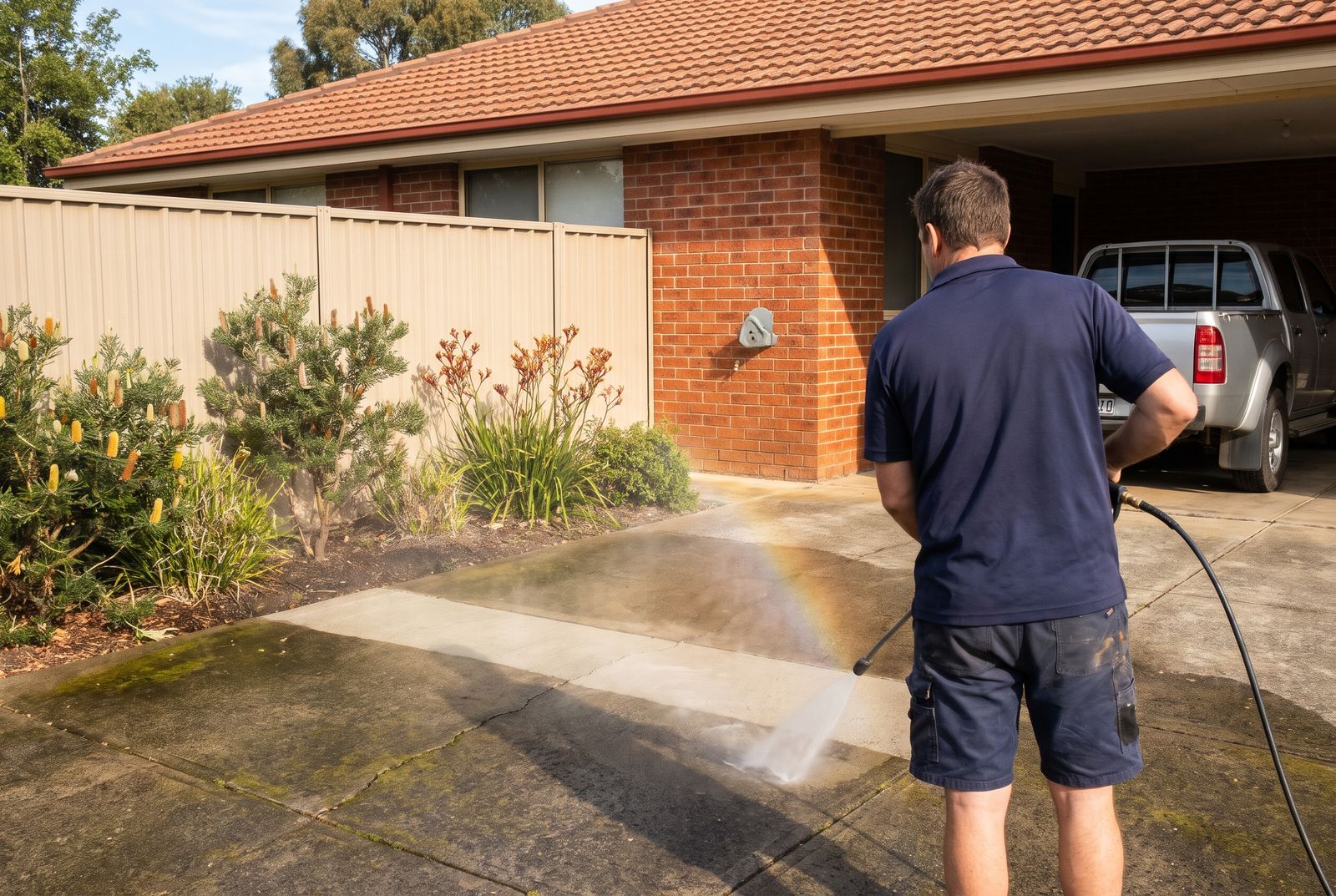
- If you pressure wash, start lowWet the patio and start on the lowest setting, working up only if you need to. Hold the nozzle about 30 cm away and move slowly, overlapping each pass. Use a wide fan tip, never a narrow pencil jet, on tiles, grout, soft stone and timber.
- Rinse it clean, away from the drainsRinse with a hose or bucket of clean water until no cleaner is left, and rinse splashed dirt off nearby walls, doors and windows. Let the water soak into a lawn or garden, never into the street gutter or a stormwater drain.
- Let it dry, then put things backLeave the patio to dry before you move the furniture and pots back. A washed surface usually stays wet for an hour or two, depending on the surface and the weather. To seal it, wait longer: concrete usually needs 24 to 72 hours.
What you need to clean a patio
Gather these before you start.
Stiff broom or scrubbing brush
A stiff-bristled broom or brush for concrete and pavers. Use a soft broom or mop on sealed tiles and sealed or stamped concrete, so you do not scratch them.
Mild detergent or pH-neutral cleaner
Start with dishwashing liquid or a mild detergent in warm water. Use a pH-neutral cleaner on tiles and natural stone, as acid can damage stone.
Bucket and garden hose
A bucket to mix the cleaner and pour it on, and a garden hose or a second bucket of clean water to rinse.
Goggles and safety gloves
Safety goggles or a face shield, and safety gloves, to wear whenever you mix or apply a cleaning chemical. Prescription glasses and sunglasses do not give reliable protection.
Pressure washer (optional)
Not essential. On flat areas, a surface cleaner attachment helps: a standard lance cleans one narrow strip at a time and can leave uneven marks.
Health and safety when you clean a patio
None of these government pages is about patios, so each item says what its page covers.
If a chemical splashes in your eyes
On its page about chemical burns to the eye, the Better Health Channel says that if a chemical splashes into your eyes, hold your face under running water for 15 to 20 minutes. It says splashes from acids or alkali chemicals are serious and may cause vision loss: seek urgent medical attention.
Do not mix bleach with other cleaners
On its page about mould removal at home, the Better Health Channel says not to mix bleach with ammonia, acids or other cleaners, as this can release hazardous chlorine or chloramine fumes. Patio guides use both bleach and vinegar, which is mildly acidic.
No high pressure water on asbestos
The Asbestos and Silica Safety and Eradication Agency says it is illegal in every state of Australia to use high pressure water spray or compressed air on asbestos materials. Older homes can have asbestos cement in walls, eaves and fences next to patios. If you are not sure about one, have it tested first.
How the method changes by patio surface
Follow the steps above, with these changes for your surface.
| Surface | How to clean it | Take care |
|---|---|---|
| Concrete | Warm soapy water or a pH-neutral cleaner and a stiff broom. It can take higher pressure than other surfaces. | Use a soft brush on sealed or stamped concrete. Vinegar can etch it or dull a sealer. |
| Pavers | Clear weeds and moss from the joints, then wash with warm soapy water. | Keep the pressure low on the joints, or the sand can wash out. Refilling them is a separate job. |
| Porcelain and ceramic tiles | A pH-neutral cleaner, or warm soapy water and a soft mop on sealed tiles. | Lowest pressure setting. High pressure can crack grout or lift tile edges. |
| Sandstone, slate, marble and other stone | A pH-neutral cleaner only, tested on a hidden spot first. | No vinegar or other acid. Lowest pressure and a wide fan tip, held further away. |
Checked on 12 November 2026.
Vinegar and bleach: where guides differ
Guides split on vinegar, and bleach comes with cautions.
White vinegar
Two guides use white vinegar on algae and hard-to-shift stains: one mixes it 50:50 with water, leaves it 20 to 30 minutes, then scrubs and rinses. Three others say to keep vinegar and other acids off natural stone, concrete paving or sealed concrete, which acid can damage. If you use it, test a hidden patch first and keep it off plants.
Bleach
Two guides use bleach on algae and moss, either one part bleach to nine parts water or a bleach-based outdoor cleaner. On timber, a professional deck clean uses oxygen bleach, not chlorine bleach. A harsh cleaner can kill a lawn, so cover garden beds first, and never mix bleach with vinegar.
Wash water and water rules: check before you start
This applies whenever you hose or pressure clean a patio.
- Keep wash water and detergent out of the drain and gutter. Send waste water from a high-pressure cleaner to a soakage area such as the garden or lawn.
- Water rules for hosing a patio differ by state, and in several by area, water supplier or town. Check yours before you start.
- Some rules apply every day. In Victoria, drinking water can only be used on hard surfaces in set cases, such as removing staining once a season.
- In South Australia, a breach of the stormwater rule can bring a $300 fine.
When to call a professional
A professional is usually the better call in these cases.
- Old stains have soaked inIf home methods have not shifted deep stains, a professional's commercial-grade cleaners and stronger machines may do more. Old oil and grease often fade rather than disappear, so ask what result to expect.
- You are unsure what pressure it can takeSoft stone, old brick pavers, tiles and timber need lower pressure and more care. Damage from getting it wrong can cost more to fix than a professional clean would have.
- The roof, beams or posts need cleaningPainted or powder-coated patio roofs, posts and beams are usually soft washed at lower pressure, as a separate job from the floor. Before you pressure clean any panels yourself, one guide suggests checking with the patio's maker.
A professional typically pre-treats moss, algae and grease with a cleaning product left 10 to 30 minutes, then uses a spinning surface cleaner, with lower pressure on grout and paver joints. A courtyard or patio usually takes 1 to 2 hours and is typically estimated at $100 to $600. Home Ready Cleaning passes your job to one local cleaning business, which is insured.
Full details: Pressure cleaning
More on pressure cleaning
More how-to guides
Pressure cleaning
Pressure cleaning in the most searched places
About Home Ready Cleaning
Official sources
Checked on 13 November 2026.
- Better Health Channel, Eye injuries - chemical burns
- healthdirect, Chemical burns - first aid and treatment
- City of Ryde, Stormwater Pollution
- EPA South Australia, Around the home
- Better Health Channel, Mould removal at home
- Asbestos and Silica Safety and Eradication Agency, The dangers of asbestos cement roofs
- NSW Government, Water restrictions
- Seqwater, Water saving advice
- TasWater, Water restriction guidelines
- Power and Water Corporation, Katherine compulsory water conservation measures
- Victorian Government, Permanent water saving rules